
Oscar Nominees: International Film
I like watching foreign-language films, taking the opportunity to appreciate the work of filmmakers and actors far from Hollywood. And I don’t mind subtitles – I much prefer them to dubbing by English-speaking actors. Too much of the performance is lost in dubbed films, and a voice that doesn’t fit the face is far more distracting than letters on the screen. The main problem with subtitles is you miss what’s going on if you briefly look away from the screen or get up to do something during the movie. (I remember one time long ago, back when watching TV required sitting in the living room, I was watching The Count of Monte Cristo mini-series in French. I needed to go to the kitchen to work on dinner, so I turned up the volume on the TV – until I remembered that listening to really loud French was not going to help me follow what was happening in the show.)
This year’s nominees take on some pretty tough topics, especially considering most are based on true stories and/or real events. The kind of movies where it’s hard to answer if someone asks, “Did you like it?” Easier to focus on production qualities and storytelling. I’ve listed the films in the order we saw them.
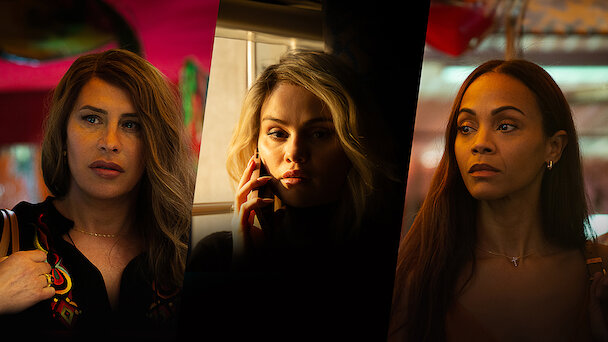
France (Spanish language): Emilia Perez
I really did not know what to expect when I saw this film. I had seen it described as a “musical crime film” that included gender reassignment. Not like anything I had seen before. It was not being shown at many theaters in our area, so we had to go a bit out of the way to see it. But it was getting lots of positive press, so I went in with an open mind.
I found the story pretty accessible, easy to get into. A kidnapping scene early on was a bit scary but I was able to go with it. From the start I liked the way music was worked into the film, not as big splashy numbers, but more conversational or explanatory, fitting in with the action. I also liked that the singing wasn’t always performance-perfect, but retained little catches in the voice or slight variations in pitch. The story was engaging and as the drug cartel leader went through what they felt was necessary to change their life, I was interested in finding out how things would develop. And when Emilia wanted to be reunited with her children – children who believed their father to be dead – I felt sure things were not going to go smoothly. And I was right.
I remember that as I watched, I wondered how the film’s focus on drug cartels and people gone missing due to cartel activity went down with Mexican viewers. From what I’ve read and heard, there’s been a lot of criticism and backlash on many levels, including use of Spanish words/phrases which do not reflect Mexican speech. The negative reactions after the initial high praise is unfortunate, but I guess that’s a risk when even one emotionally or politically-charged topic is portrayed in a film, and broad media coverage is rarely likely to keep things calm.
I thought Emila Perez was interesting and well done, but I don’t quite know how to gauge my reactions to it against those from people living in the country represented. I mean, what do I know? For me it’s a form of entertainment, a chance to maybe learn something about people’s lives in another country. But maybe not so much. This won the Golden Globe, but the Oscar? It got the most nominations overall, but seems to have lost some momentum with regard to awards buzz. We’ll soon find out.
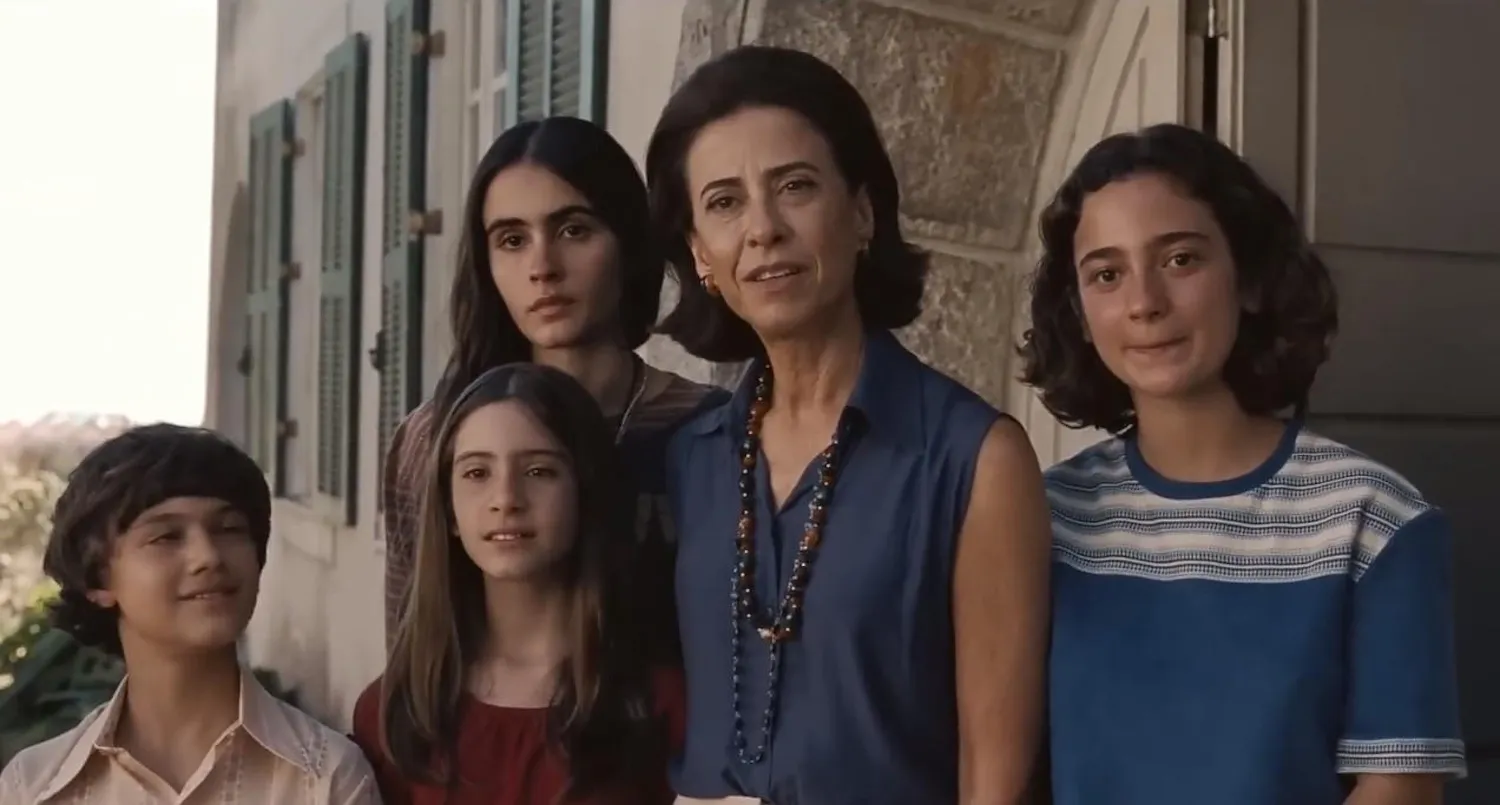
Brazil: I’m Still Here
Seems to be a likely contender for the international feature Oscar, especially since it also received a Best Picture nomination.
This true story was happening when I was about 12 years old. I would have been aware of Brazil as a country, probably aware that there might be some political tensions there, but that’s about it. And it’s not like I know that much about Brazil now. This film does an excellent job of conveying the impact of those political tensions on a family when the husband/father disappears.
On one level, the plot of this film is straightforward. We meet a happy, close-knit family. We don’t know all the details about what has happened previously, but the father talks with some colleagues and obviously becomes concerned. He leaves home and does not return. His wife does all she can to find out what has happened to him while keeping her family together and she eventually succeeds.
That is of course a very simplified description of the film, but I guess what I’m trying to say is that we don’t need to be conversant with Brazilian political history to get into the film. We learn enough as it goes along to make sense of the actions taken, and to understand the fear and concern felt by this ordinary family and the boldness and determination of the wife/mother. The strength of the storytelling is in how it carries us along as we join in on the search for a husband and father. Her search is not frantic; it is methodical and relentless. We want her to succeed. Fernanda Torres’ performance drives the action of the film.

Denmark/Poland/Sweden (Danish): The Girl with the Needle
From the beginning, it’s clear this film is going to be grim. It’s post-WWI and a young woman is left with no widow’s compensation because her husband has not been declared dead. She moves to a nasty apartment and works as a seamstress in a factory. She begins a flirtation with the boss, which of course is doomed from the start. Once she finds she is pregnant, her battle-mutliated husband returns. After trying to abort the baby, she meets a woman who says she is running a secret adoption agency. When her baby is born, she takes the infant to the woman and rather than pay the fee, she becomes a wet nurse for babies brought to the woman until they find a home. Again, there is no hint of a hopeful, warm and fuzzy feeling in this whole setup.
Some major trigger warnings in this film – horrible war wounds, PTSD, deadbeat dad (with a nasty controlling mother), abject poverty, drug abuse infant murder. And yet, in some ways this is a beautiful film. Black and white is used masterfully, providing a stark but stunning backdrop for the story, which the director calls “a fairy tale for grownups.” That description suits the film, since the original, non-Disney versions of most fairy tales can be rather gruesome. And it does have a sort of happy ending with healing and reconciliation and positive steps toward getting on with life and not being alone.

Iran/Germany/France (Farsi): The Seed of the Sacred Fig
A bold, gripping story that had to be filmed in secret. And it’s a pretty remarkable, well-made film, considering it had to be done completely on the sly. The story of getting the movie made could itself probably be made into a thriller, since the writer/producer/director has been arrested many times for violating censorship laws and had his passport confiscated. After making this film he was sentenced to 8 years in prison, flogging and confiscation of his property, but managed to escape to Europe over a 28-day “exhausting, long, complicated and anguishing journey.”
The story is ficitional but depicts a family in Tehran during 2022-2023 protests, in which students and women played significant roles. We meet a devout, honest lawyer – husband and father of a close-knit family – who receives a promotion to investigating judge in the Revolutionary Court in Tehran. He and his wife are pleased with the recognition of his years of hard work and talk about the perks of more money and a bigger apartment and the benefits for their daughters. It doesn’t take long to learn that moving up in a government position is more complicated than that.
At first, his wife is totally on board, encouraging their teenaged daughters to be cautious about talking with their friends about their father’s work, posting on social media, etc. She believes it’s all for the good and her husband will prove his skills in the new position and continue to be promoted. Then he brings a gun home. For protection of the family, he says. He also becomes more and more reticent about talking about his work and is clearly shaken, usually withdrawing to the bedroom alone at the end of his day.
Meanwhile the girls become ever more concerned about the protests they’re seeing on social media and even more concerned when a friend disappears – a friend who had previously been shot for being in the wrong place at the wrong time, making her a suspect for being part of the protesting mob. Their father becomes more paranoid each day and falls more in line with government policies and agendas, making himself believe the arrests, beatings and executions are justified. He takes the family away so they can have some time alone together, but he turns on them. They fight back.
The film does a great job of incorporating actual cell phone footage of the riots. Placing the chaos and fear during these events firmly into what was once a normal family setting is terrifying. I was forced to imagine – What must that have been like? As a mother, what would I have done? What could I have done? What would have happened to my daughter? It was difficult to watch, but we had to see it through. I’m thankful that the film made it into safe hands. I’m glad we saw it. Sometimes I need to be forced to remember that my little world is not the whole world.

Latvia/France/Belgium: Flow
An international film that requires no subtitles because it’s all animals, all the time. No humans were required in the making of this film. (Maybe a few behind the scenes.) We can understand meows and barks and squawks as well in foreign-language films as we can in English.
Even without a language that ties it to a specific country, this film suits the international category because it’s hard to pin down just where in the world the action is happening – sometimes looks like Europe, sometimes like Southeast Asia – and ocean-blue water is everywhere. I kind of felt like it was representing the whole world, the way it might work if the inhabitants worked together and accepted each other’s unique abilities no matter where they meet along the way. I doubt it will win best international feature, but it’s a lovely film.
 OK Boomer