Bring on the subtitles

Oscar Nominees: International Film

I like watching foreign-language films, taking the opportunity to appreciate the work of filmmakers and actors far from Hollywood. And I don’t mind subtitles – I much prefer them to dubbing by English-speaking actors. Too much of the performance is lost in dubbed films, and a voice that doesn’t fit the face is far more distracting than letters on the screen. The main problem with subtitles is you miss what’s going on if you briefly look away from the screen or get up to do something during the movie. (I remember one time long ago, back when watching TV required sitting in the living room, I was watching The Count of Monte Cristo mini-series in French. I needed to go to the kitchen to work on dinner, so I turned up the volume on the TV – until I remembered that listening to really loud French was not going to help me follow what was happening in the show.)

This year’s nominees take on some pretty tough topics, especially considering most are based on true stories and/or real events. The kind of movies where it’s hard to answer if someone asks, “Did you like it?” Easier to focus on production qualities and storytelling. I’ve listed the films in the order we saw them.
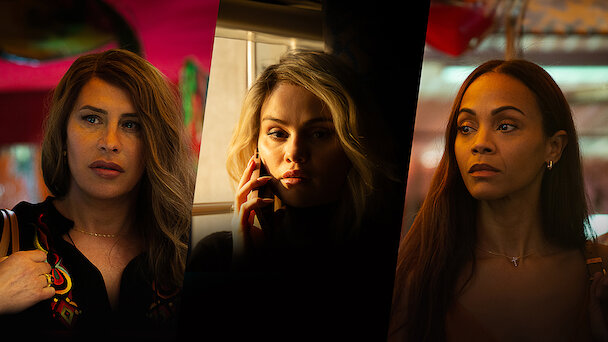
France (Spanish language): Emilia Perez

I really did not know what to expect when I saw this film. I had seen it described as a “musical crime film” that included gender reassignment. Not like anything I had seen before. It was not being shown at many theaters in our area, so we had to go a bit out of the way to see it. But it was getting lots of positive press, so I went in with an open mind.

I found the story pretty accessible, easy to get into. A kidnapping scene early on was a bit scary but I was able to go with it. From the start I liked the way music was worked into the film, not as big splashy numbers, but more conversational or explanatory, fitting in with the action. I also liked that the singing wasn’t always performance-perfect, but retained little catches in the voice or slight variations in pitch. The story was engaging and as the drug cartel leader went through what they felt was necessary to change their life, I was interested in finding out how things would develop. And when Emilia wanted to be reunited with her children – children who believed their father to be dead – I felt sure things were not going to go smoothly. And I was right.

I remember that as I watched, I wondered how the film’s focus on drug cartels and people gone missing due to cartel activity went down with Mexican viewers. From what I’ve read and heard, there’s been a lot of criticism and backlash on many levels, including use of Spanish words/phrases which do not reflect Mexican speech. The negative reactions after the initial high praise is unfortunate, but I guess that’s a risk when even one emotionally or politically-charged topic is portrayed in a film, and broad media coverage is rarely likely to keep things calm.

I thought Emila Perez was interesting and well done, but I don’t quite know how to gauge my reactions to it against those from people living in the country represented. I mean, what do I know? For me it’s a form of entertainment, a chance to maybe learn something about people’s lives in another country. But maybe not so much. This won the Golden Globe, but the Oscar? It got the most nominations overall, but seems to have lost some momentum with regard to awards buzz. We’ll soon find out.
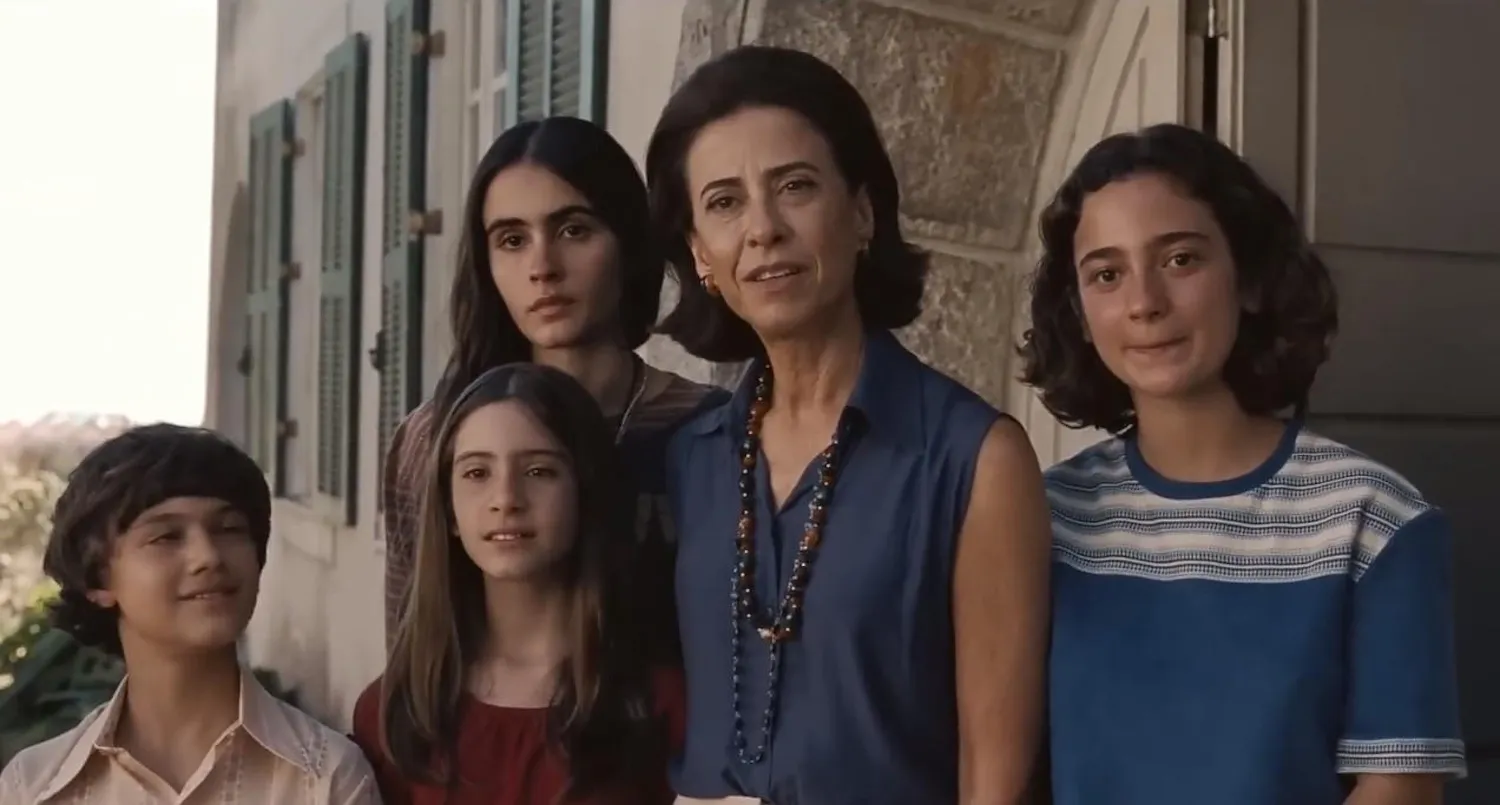
Brazil: I’m Still Here

Seems to be a likely contender for the international feature Oscar, especially since it also received a Best Picture nomination.

This true story was happening when I was about 12 years old. I would have been aware of Brazil as a country, probably aware that there might be some political tensions there, but that’s about it. And it’s not like I know that much about Brazil now. This film does an excellent job of conveying the impact of those political tensions on a family when the husband/father disappears.

On one level, the plot of this film is straightforward. We meet a happy, close-knit family. We don’t know all the details about what has happened previously, but the father talks with some colleagues and obviously becomes concerned. He leaves home and does not return. His wife does all she can to find out what has happened to him while keeping her family together and she eventually succeeds.

That is of course a very simplified description of the film, but I guess what I’m trying to say is that we don’t need to be conversant with Brazilian political history to get into the film. We learn enough as it goes along to make sense of the actions taken, and to understand the fear and concern felt by this ordinary family and the boldness and determination of the wife/mother. The strength of the storytelling is in how it carries us along as we join in on the search for a husband and father. Her search is not frantic; it is methodical and relentless. We want her to succeed. Fernanda Torres’ performance drives the action of the film.
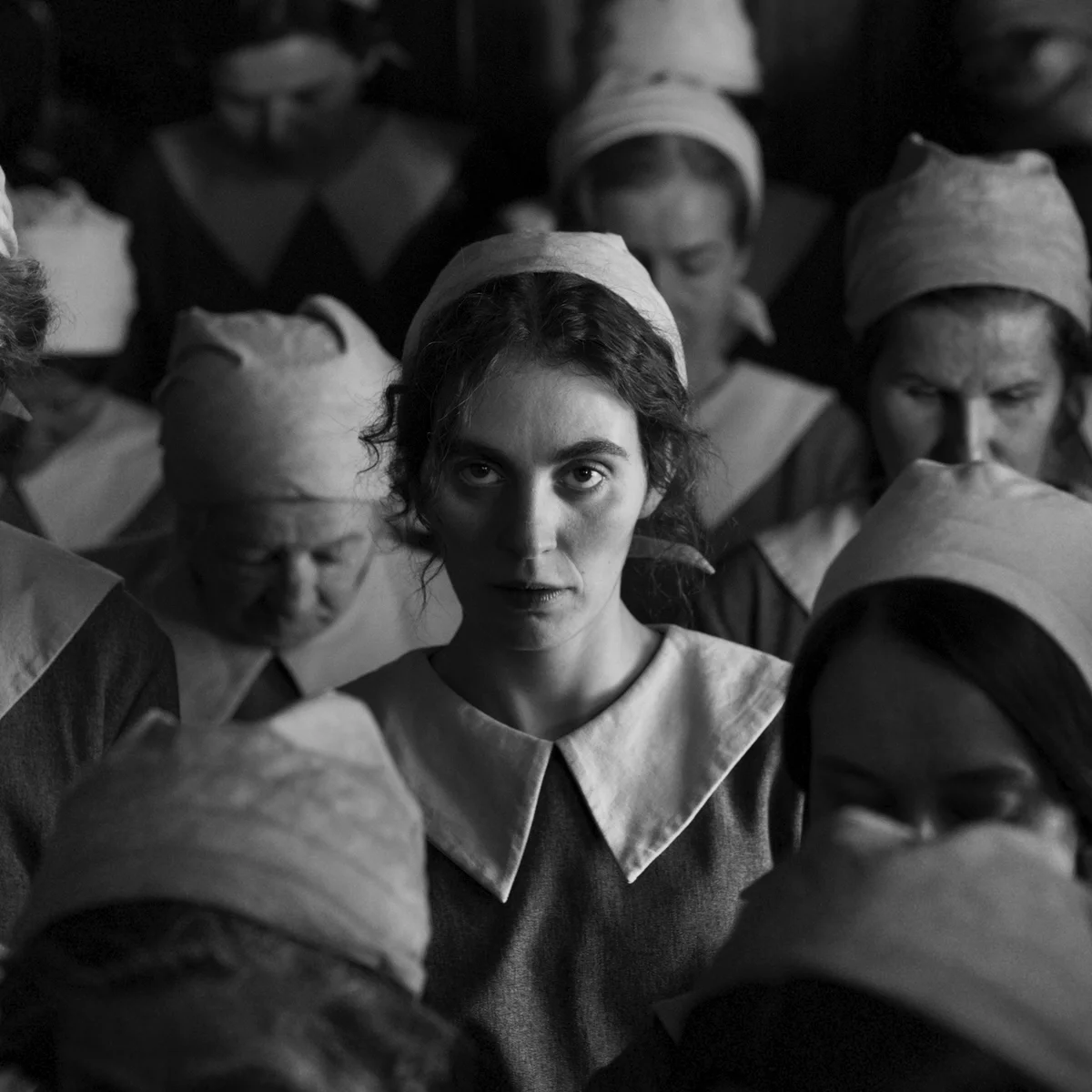
Denmark/Poland/Sweden (Danish): The Girl with the Needle

From the beginning, it’s clear this film is going to be grim. It’s post-WWI and a young woman is left with no widow’s compensation because her husband has not been declared dead. She moves to a nasty apartment and works as a seamstress in a factory. She begins a flirtation with the boss, which of course is doomed from the start. Once she finds she is pregnant, her battle-mutliated husband returns. After trying to abort the baby, she meets a woman who says she is running a secret adoption agency. When her baby is born, she takes the infant to the woman and rather than pay the fee, she becomes a wet nurse for babies brought to the woman until they find a home. Again, there is no hint of a hopeful, warm and fuzzy feeling in this whole setup.

Some major trigger warnings in this film – horrible war wounds, PTSD, deadbeat dad (with a nasty controlling mother), abject poverty, drug abuse infant murder. And yet, in some ways this is a beautiful film. Black and white is used masterfully, providing a stark but stunning backdrop for the story, which the director calls “a fairy tale for grownups.” That description suits the film, since the original, non-Disney versions of most fairy tales can be rather gruesome. And it does have a sort of happy ending with healing and reconciliation and positive steps toward getting on with life and not being alone.

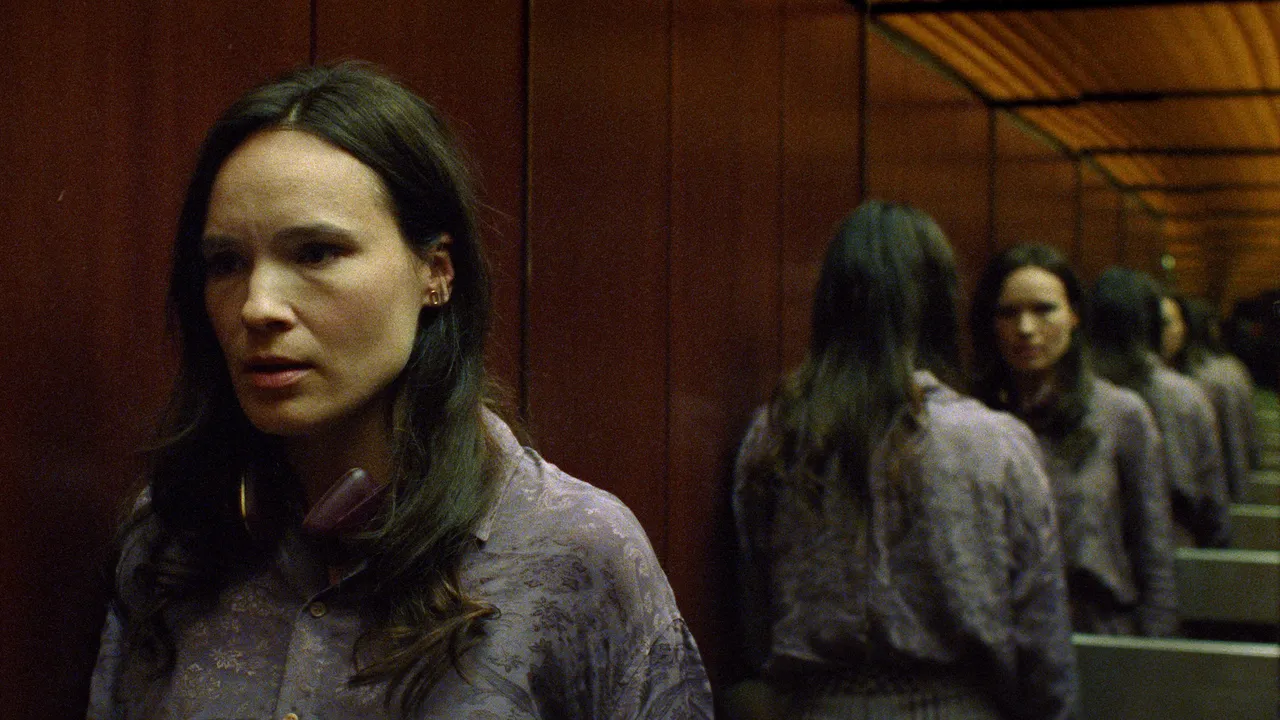
Iran/Germany/France (Farsi): The Seed of the Sacred Fig

A bold, gripping story that had to be filmed in secret. And it’s a pretty remarkable, well-made film, considering it had to be done completely on the sly. The story of getting the movie made could itself probably be made into a thriller, since the writer/producer/director has been arrested many times for violating censorship laws and had his passport confiscated. After making this film he was sentenced to 8 years in prison, flogging and confiscation of his property, but managed to escape to Europe over a 28-day “exhausting, long, complicated and anguishing journey.”

The story is ficitional but depicts a family in Tehran during 2022-2023 protests, in which students and women played significant roles. We meet a devout, honest lawyer – husband and father of a close-knit family – who receives a promotion to investigating judge in the Revolutionary Court in Tehran. He and his wife are pleased with the recognition of his years of hard work and talk about the perks of more money and a bigger apartment and the benefits for their daughters. It doesn’t take long to learn that moving up in a government position is more complicated than that.

At first, his wife is totally on board, encouraging their teenaged daughters to be cautious about talking with their friends about their father’s work, posting on social media, etc. She believes it’s all for the good and her husband will prove his skills in the new position and continue to be promoted. Then he brings a gun home. For protection of the family, he says. He also becomes more and more reticent about talking about his work and is clearly shaken, usually withdrawing to the bedroom alone at the end of his day.

Meanwhile the girls become ever more concerned about the protests they’re seeing on social media and even more concerned when a friend disappears – a friend who had previously been shot for being in the wrong place at the wrong time, making her a suspect for being part of the protesting mob. Their father becomes more paranoid each day and falls more in line with government policies and agendas, making himself believe the arrests, beatings and executions are justified. He takes the family away so they can have some time alone together, but he turns on them. They fight back.

The film does a great job of incorporating actual cell phone footage of the riots. Placing the chaos and fear during these events firmly into what was once a normal family setting is terrifying. I was forced to imagine – What must that have been like? As a mother, what would I have done? What could I have done? What would have happened to my daughter? It was difficult to watch, but we had to see it through. I’m thankful that the film made it into safe hands. I’m glad we saw it. Sometimes I need to be forced to remember that my little world is not the whole world.
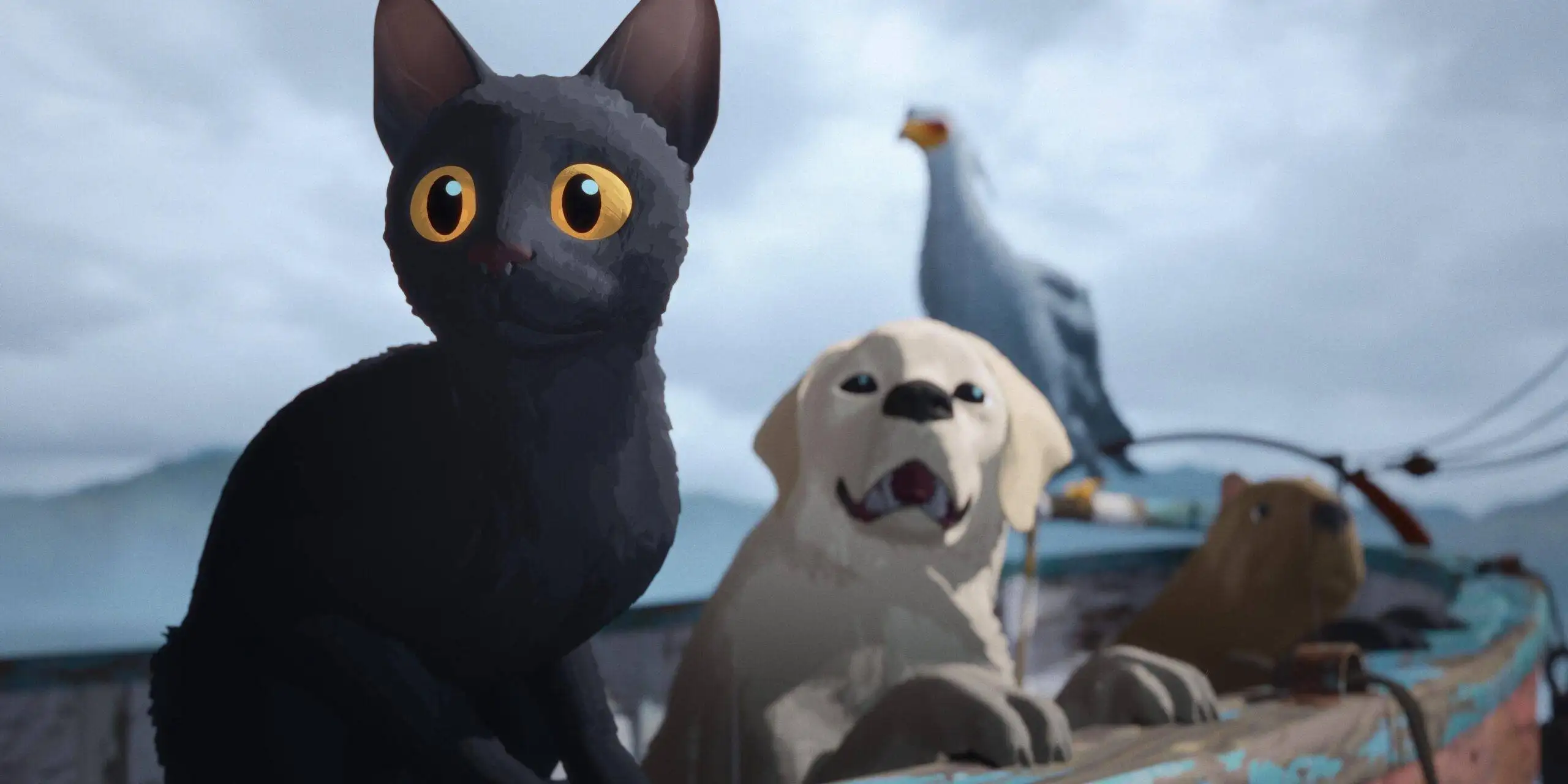
Latvia/France/Belgium: Flow

An international film that requires no subtitles because it’s all animals, all the time. No humans were required in the making of this film. (Maybe a few behind the scenes.) We can understand meows and barks and squawks as well in foreign-language films as we can in English.

Even without a language that ties it to a specific country, this film suits the international category because it’s hard to pin down just where in the world the action is happening – sometimes looks like Europe, sometimes like Southeast Asia – and ocean-blue water is everywhere. I kind of felt like it was representing the whole world, the way it might work if the inhabitants worked together and accepted each other’s unique abilities no matter where they meet along the way. I doubt it will win best international feature, but it’s a lovely film.

Some stories work better without people getting in the way

Oscar Nominees: Animated Feature

In recent years my husband and I have been going to the movies like it’s our job, but we typically skip most of the potential nominees for best animated feature. We don’t have anything against animated pics, but once our kids grew up, we stopped going out of our way to see them unless there was something new or special about them.

This year we actually saw all five of the animated feature nominees, partly because our 25-year-old daughter is currently living with us and she’s a fan of the genre. We saw the first two in the theater, the rest we streamed at home. I enjoyed all five of them and consider them worthy nominees. As I reflect on them now, I realize that they include fine examples of the use of animation to effectively address challenging subject matter.

Here are the nominees, in the order we saw them:

Inside Out 2

It’s been a while since I saw this one. I remember we watched the first Inside Out the night before to refresh our memories, and I was glad we did. Seeing the previous film made it clear that this was a better, more interesting film. Not that I didn’t like the first one, but the second had a more complex story and cooler animation. It also did a good job of highlighting the new emotions that come with adolescence. I loved how the portrayal of the new emotions – anxiety, envy, embarrassment, and ennui – had just the right balance between ridiculous and absolutely serious, because the emotions roused by the ravages of puberty fit into both categories.

I remember the animation as more impressive than I expected, showing texture and movement and color with what seemed to me to be new techniques. The consistency of colors and characters between the first and second movies was very good, but Inside Out 2 was an enjoyable improvement all around. But probably not the best animated film of the year.

The Wild Robot

When I saw the trailers for this movie, I wasn’t sure about how much I would like it. I was afraid it would over the top in some direction – maybe too much focus on robots or the environment, a bit like an updated Wall-E. Or sappy without much of an engaging story. But I knew it had great reviews, so when we went to see it I was hopeful.

For me the story got off to a bit of a slow start. It was visually interesting and pleasant enough, but I wasn’t quite believing it in the beginning (and some aspects of it did kind of remind me of Wall-E). But as Roz the robot got involved with the local wildlife, and especially when the flight training began for her adopted goose, I settled into the story. And it was an engaging story, taking me places I didn’t expect to go, mixing in a lot of great messages about working together and thinking about others more than yourself.

I appreciated the fact that the animation was kind of traditional, not trying to make the animals look like they’re almost real. It was colorful, creative, engaging. But overall, it seemed to me to be your standard, high-quality animated film – the type put out by major film companies every year. I enjoyed it. I even cried a bit. (My husband and I cry at movies more often than not. What can I say? We allow ourselves to enter the story.) From all I’ve read, this one is expected to win the Oscar, and if it does, then a hearty congratulations to all involved. It’s a well-made film with a positive message that’s not too heavy-handed, and it reached a lot of young people. I definitely don’t mind seeing a film like that win awards.

Wallace and Gromit: Vengeance Most Fowl

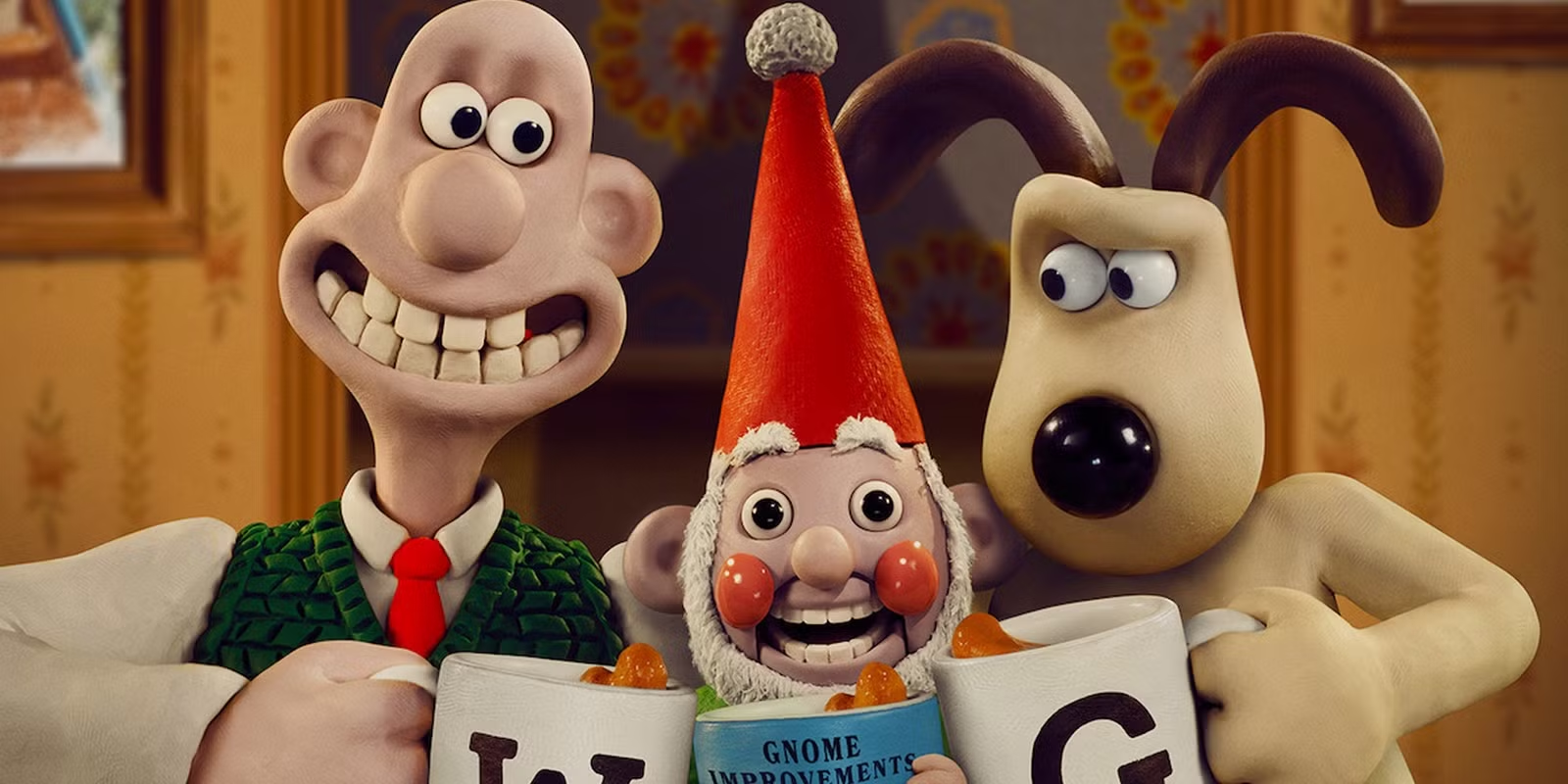
I love Wallace and Gromit. My whole family loves Wallace and Gromit. I was so happy to hear my three-year-old grandson nearly overcome with laughter while watching The Curse of the Were-Rabbit. So of course there was no question that we would watch and enjoy this film. And once again the intrepid duo delivered a grand adventure of a tale, and I will no doubt watch it again.

I’m always impressed by the time and skill it takes to make a good stop-motion animated film and Nick Park and Aardman Animations have been putting in the time with great success for decades. I love what they produce and will always watch their films. Is this the best animated feature of the year? If Wallace and Gromit win – fabulous. Heck, I think they should get a lifetime achievement Oscar.

Memoir of a Snail

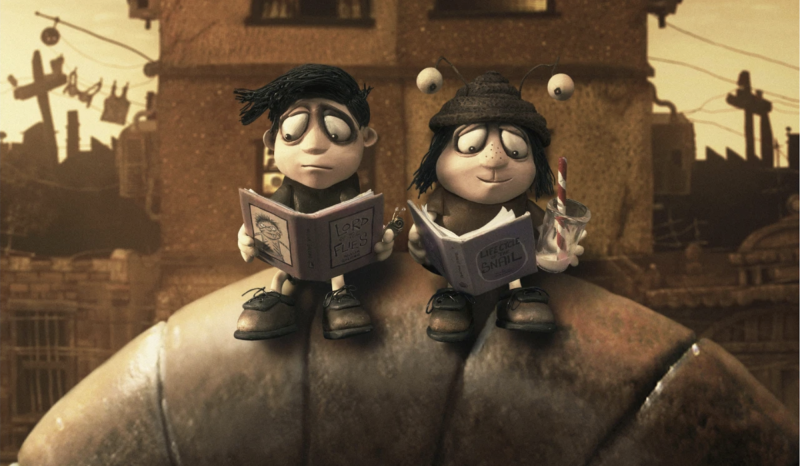
After watching this film, the word that came to mind over anything else was “unforgettable.” I have definitely never seen a film like it – animated or otherwise. So many potentially-life-destroying topics are explored here. I’m not even sure I can remember all of them but they include: physical deformity, death of parents, bullying, abusive foster parents, religious fanatacism, abusive partner, hoarding, playing with fire, obsession, homophobia, alcoholism, loneliness. And yet, I laughed out loud more than once. The humor was often pretty grim, but it was clever and genuinely funny. This film was also quite touching, portraying deep and loving relationships. (And yes, I did get a bit teary-eyed at one point.)

Throughout, I kept wondering if I would even watch a live-action film that explored so many tragic real-life topics and tried to make viewers laugh. And I’m pretty sure I would give such a film a miss. I doubt if I could take it. If this is the story that needs telling, stop-motion animation is a perfect format. It gives us some space to process what’s happening without being overwhelmed. We can take a break from the sadness and admire the dense and intricate set constructed from clay.

The animation was exceptional and did not pretend to be realistic. It was fabulous, cartoonish claymation. I want to say it was colorful, but that’s not quite true. There was a muted tone about the whole film that suited it perfectly. And there was so much detail – a believable and complete clay world. I would award the Oscar for best animated feature to this film because it uses excellent animation to venture into very difficult territory. It stands out among the nominees.

Flow

This lovely film is unique among the nominees in that it uses no words. An international film that requires no subtitles. The animals in the starring roles are not pretending to be anything else, so they can’t talk. They can do a lot of surprising things, but they can’t talk.

Flow takes us on a wild boat ride with an unlikely crew of animals. A catastrophic flood hits a world that is filled with wildlife, but appears to be post-human. Plenty of manmade structures, but no people. Cat is our main character, who scrambles onto a passing boat just as the waters rise above the chance of any foothold – even for a cat.

There’s a capybara already onboard. The animals give each other a sniff and float off together. Things get a little crazy when a flock of secretarybirds fly over and the cat falls overboard, but is saved by a very interesting-looking whale. A bit later on, the capybara invites a ring-tailed lemur with a basket of trinkets to join them. Then a Labrador who was previously friendly to Cat joins as well. During a brief stay on land, a hostile flock of secretarybirds go after the little group, but one stands up for them and ends up injured and unable to fly. Naturally, the bird joins the crew.

The action and adventure in the film is nonstop and very entertaining. The animated world is lush and beautiful and always in motion. It reminded us a bit of the graphics for the 1993 video game Myst. It’s hard to pin down just where in the world the action is happening – sometimes looks like Europe, sometimes like Southeast Asia. That may be part of the point of the film – a story about acceptance and cooperation, finding ways to communicate and work together to get through difficult situations, no matter where you are or who you are. And in telling that story, it succeeds beautifully. It would be nice if it won.

Getting straight to the point – with a gut punch

Oscar nominees: Live-action Short Film

When I bought tickets to see all of the Oscar nominees for live-action short film in a single showing, I was pleased for the opportunity of a new movie-going experience. This year I would have reason to pay close attention to that section of the Oscar presentations, rather than thinking, “Very nice, well done, let’s get on to the real awards.”

One thing I found in watching these short films is that they are very real, with obvious effort and heart put into their production. I also found that it’s one thing to watch a single moving tale about something that is out of joint in the world around us. It is a very different thing to watch five of them in a row.

We were emotionally spent. Exhausted. Sad, even heartbroken. Wondering if there was any hope for lasting positive change around the world. Despairing that there will always be people in desperate situations and people who care only about their own gain, their own power, their own beliefs. It was hard because we knew that, even though some were fictional, these stories were very real.

I’m listing the 5 nominees in the order they were shown at the theater. And spoiler alert – I’m going to talk these all the way through because the importance of these films is very much in the point they’re making, and that tends to be made clear in way it ends.

Croatia: The Man Who Could Not Remain Silent

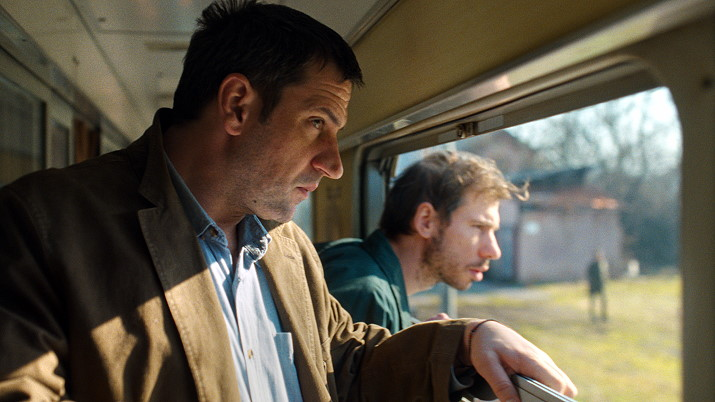
We watch an ordinary-looking man sitting quietly in his train car with a small group of people traveling through Boznia/Herzegovina on an everyday-looking train ride. The train makes an unscheduled stop but no official announcement is made. People get up to look out the windows at the commotion outside.

Paramilitary thugs board the train, demanding to see passengers’ identification documents, asking questions about their families’ patron saints. Passengers witihout documents or who are muslim are forced off the train and into the back of a truck. A young man in our car admits he has no documentation. Our ordinary man assures him it will be all right, that they won’t let anything happen to him.

But when the thugs appear in their car and try to take the boy from the train, most remain silent, intimidated by the bullies with rifles. Some feeble protests that he’s done nothing wrong. But one man stands and demands to know what right they have to treat passengers this way, demands to speak to their superior officer. His documents show that he is a retired naval officer. He refuses to back down and they take him out to the truck instead of the boy. No one in the car reacts. The train starts up again and enters a tunnel. The film ends with a tribute to Tomo Buzov, who was executed for his attempts to stop the massacre in 1993.

I appreciated the title of this film because I didn’t know the story. I didn’t know who could not be silent or why, so watching a car full of pretty silent people, I was kept wondering who it would be. I initially thought it would be the man we met first, so I kept watching him. Then he let us down. The undocumented boy didn’t speak up for himself much. Then we hear a voice rising up out of the frightened silence and it is powerful, even though by that point we know it will not end well for him.

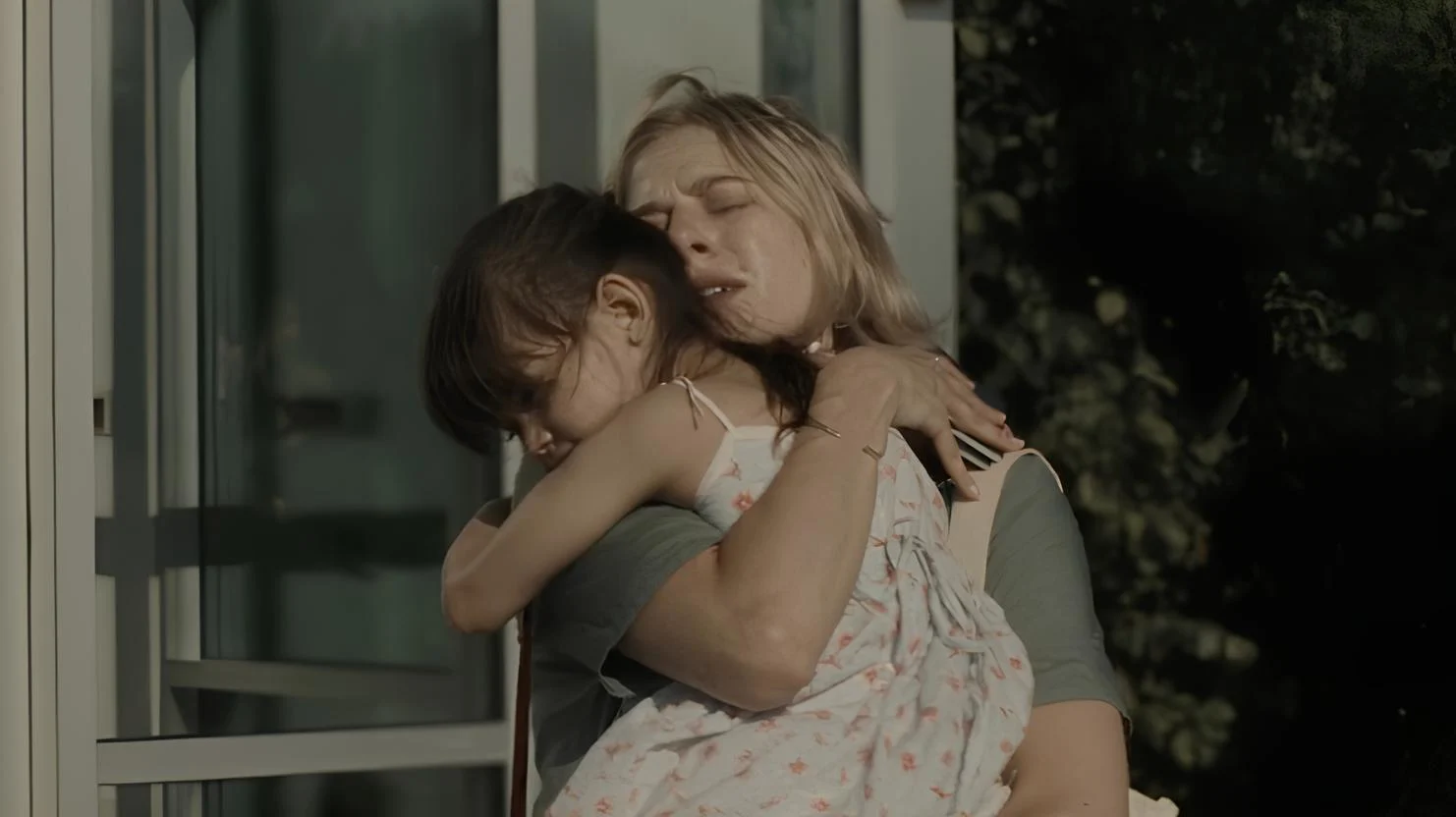
United States (Hindi language): Anuja

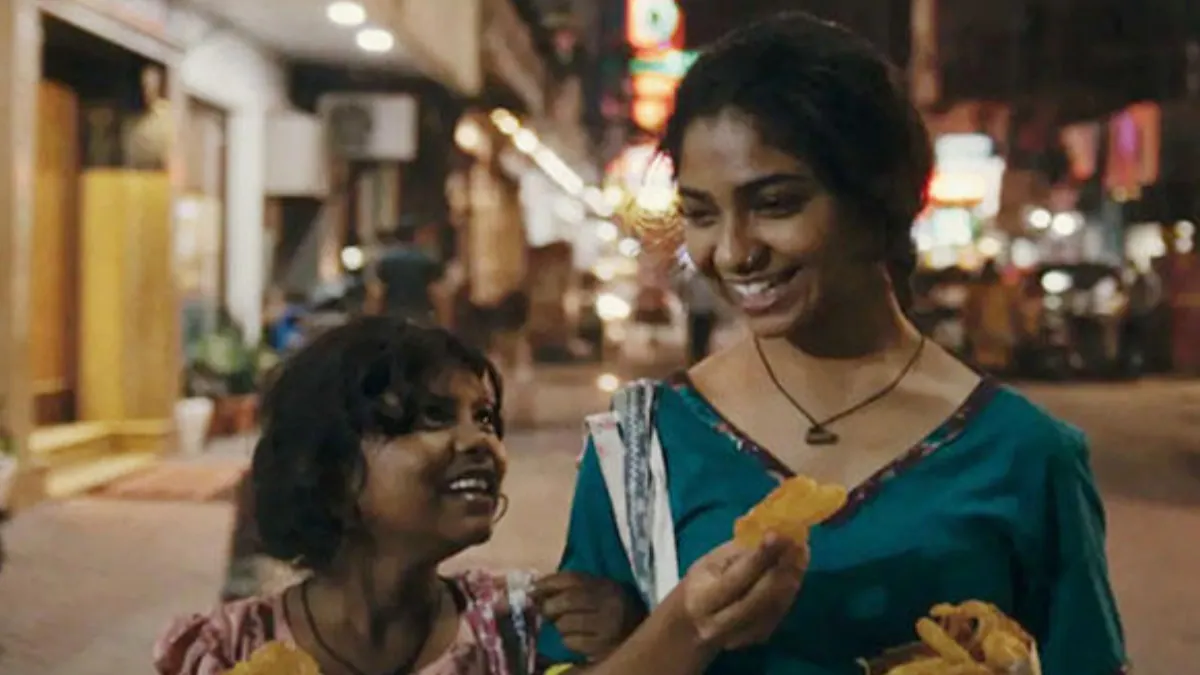
We meet two orphaned sisters in Delhi. The girls live on their own in a shack on the streets and work in a garment factory making handbags. They are obviously close and trying to make the best of their lives.

The younger girl is clearly elementary-school age and we find that she is mathematically gifted when a teacher comes to the factory to insist she be allowed to come and take a test that would allow her to go to boarding school. The test costs 400 rupees ($5), which the girls do not have. The factory boss wants to keep the girls in the factory, claiming staying together and making some money will be better for them. Once he realizes the young girl is a math whiz, he also has ideas of using her for bookkeeping/accounting rather than paying a professional and tells her he wants her in his office first thing in the morning rather than going to take any test, suggesting that if she doesn’t, she and her sister may be out of a job.

The older sister reveals that she has been secretly making handbags with scrap material and decides they should go into the markets and sell the handbags to raise money for the test. They sell enough for the test and for a trip to the movies. But on the morning of the test, we are left watching young Anuja as she stands out in the street deciding between staying with her sister – her only family and best friend – and moving away to a future that she understands little about. For us, the story ends there.

I thought that ending was great because as the film progressed, I was more and more unsure about what the best choice was. When it came down to it, the factory boss wasn’t a terrible guy. He employed minors, yes, but didn’t seem to be abusive. He would pay her more for her accounting work and would no doubt treat the sister well to keep them happy. The teacher didn’t show a huge interest in the girl, other than it might be a feather in his cap if he found a prodigy for the boarding school, one that would also tick a box to show how inclusive they were. (In the factory office he slips up at one point and says good opportunities are rare for “that kind of girl,” likely referring to her poverty and dark skin tone.)

I enjoyed the film because of the obvious love between the sisters and their positive attitude about life. At the end we get to see the star of the show happily watching the movie with her classmates at a school for street children in Delhi.

Netherlands/Belgium: I’m Not a Robot

Opens with a quiet office scene, a woman working at her laptop. A system update prompts her to restart her laptop and requires her to go through some “I am not a robot” tests that anyone using smart phones or computers has seen. She fails the tests time after time, until she gets to a link asking her to answer some questions. When she completes that task, she gets a message that informs her that there is an 87% chance that she is, in fact, a robot.

This is obviously extremely annoying and she wonders if it’s a glitch or a prank. No one at work can help her and she calls her boyfriend to vent. He becomes more and more uncomfortable as they talk and then falls back on the old, “Sorry, you’re breaking up. We’ll have to talk later.” Obviously, he knows something she doesn’t. Sure enough, he later arrives at the office with a woman representing the company from which he had bought her years ago.

The young woman really does not want to be a robot and has trouble accepting that many of her memories are merely programming. Her boyfriend assures her he loves her and it shouldn’t change anything about their relationship. He had her programmed so that she could think freely and have her own opinions and he loves that she is a strong woman. She’s not having any of it. During the course of the conversation/argument, she learns that she cannot die until after he does. She asks if his former girlfriend had died. The answer is yes, so he wanted to make sure that could never happen to him again. Thus, a robot girlfriend who can’t predecease him. She gets mad and tries to prove him wrong by jumping off the roof of the parking structure. She hits the ground, blood seeps out beneath her head. Her eyes open and she begins to weep.

For me, this film was the least satisfying of the lot. It was less emotionally charged, and it left me feeling a bit flat. In the end, I was not sure what the main point was. It didn’t leave a strong feeling about abuse of women or dismissal of their rights as people. It didn’t seem to be a strong message about misuse of technology or a science-fiction-style warning about the potential dangers of sentient robots. And I wasn’t left with any feeling that maybe we’re all in danger of becoming like robots. It just kind of ended as a tale about a robot who would have been a lot happier not knowing she was a robot.

United States: A Lien

This was tough to watch. A bit too close to home and very, very current. We see a young couple and their daughter rushing to a meeting. The husband has a mandatory interview as he seeks US citizenship. He has lived in the US most of his life. His wife of six years is a US-born citizen. He served in the US military. While he is in his interview, his wife sees people being taken away in handcuffs. His name is called over the loudspeaker. The wife panics, runs from person to person asking questions, demands that their passports be returned. Everyone she talks to tells her it’s not their department, she just has to wait. During a distraction, she snatches the passports.

She runs outside to see her husband and 5-year-old daughter being forced into a car by ICE agents. She screams and forces one of the officers to look at her daughter’s valid US passport. He grudgingly allows the girl to return to her mother, but husband and wife have to say goodbye for now as he is taken away. The film ends with text on the screen about ICE regularly intercepting applicants for citizenship at their mandatory interviews.

The film is frantic, recorded by handheld cameras (at least that’s what it looks like to me). The surroundings are constantly in motion and everything is in confusion. The main characters don’t know which way to turn and there are no clear answers for them from anyone. They wait and plan to fight back because they have no other choice.

My husband thought this was the best film of the lot because of the depiction of frantic intensity and confusion. For me it’s too much a current reality to appreciate on an artistic level. But maybe that’s part of the point.

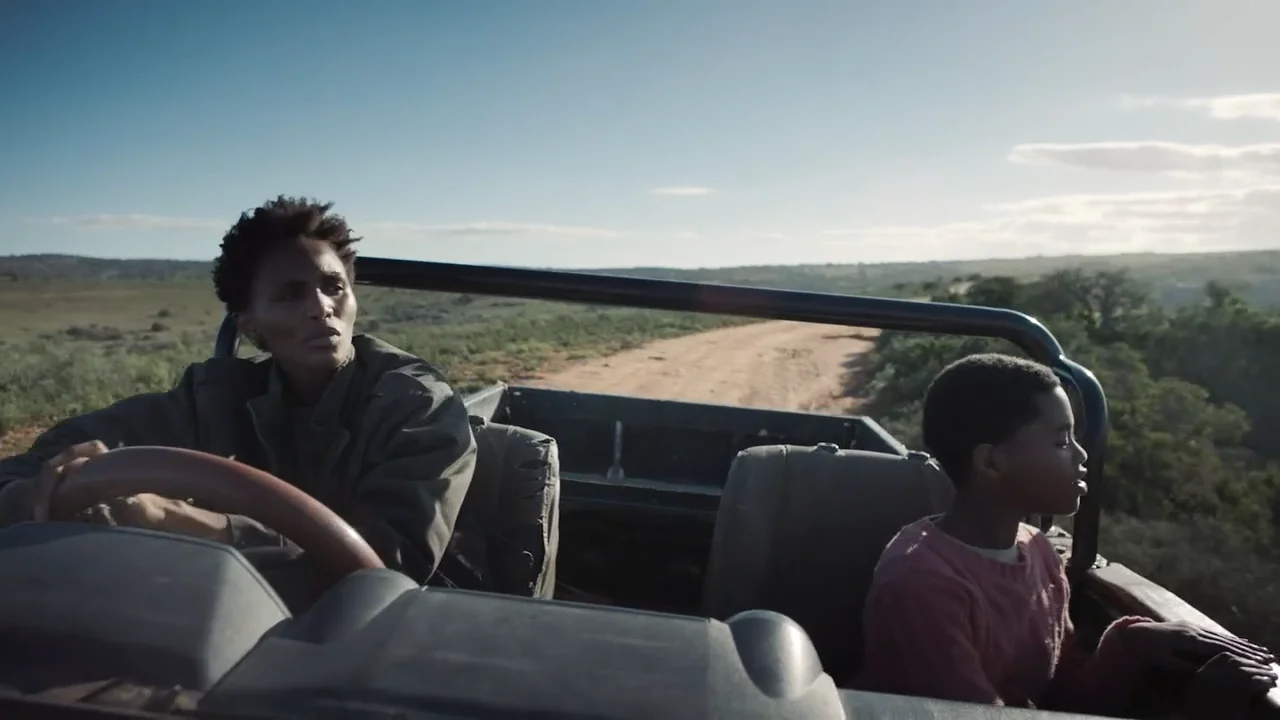
South Africa: The Last Ranger

This film is visually beautiful, scary and intense. We get to experience the wonders of a game reserve in South Africa, along with the fight against poachers. We ride along with rangers dedicated to the conservation of the wild areas and the protection of the animals that live there. And we get to see that they are willing to risk their own lives in that fight.

Walking along the road, a young girl meets a ranger that she knows and is invited to ride along to visit some rhinos. Poachers attack as they watch the grazing animals. The ranger tells the girl to duck down in the car and she draws her weapon and calls for backup. Gunfire erupts, a poacher is wounded, the ranger is killed. A tranquilized rhino’s horn is removed with a chainsaw. The young girl records it all on a phone. As she goes to the side of her dying friend, she sees her father and learns he had helped the poachers by tranquilzing the rhino in his desperation for money to support his family. He helped in the end by tranquing one of the poachers and apologizes to his daughter for his part in this horror.

The ranger’s partner arrives, sees the injured rhino is still alive and asks for the girl’s help. Cut to the future and the young woman is working as a ranger. We learn that the story is true, that the rhino survived, had many calves and is still alive and protected. We learn that poachers have killed over 100,000 rhinos and killed 1,000 rangers in their theft of rhino horns. Horns that are no more magical or medicinal than fingernails or hair. The film closes with video clips of the hornless rhino living a good life and an interview with a ranger who assures us she will be a ranger for her whole life and would die to protect the wildlife she loves. Even with the grim reality of poaching, this film gets my vote for best short film because it leaves us with some hope.

Though watching these films was a rough 90 minutes, I’m glad we saw them. All were well done, gripping, very watchable. Maybe it would be easier to watch them individually over time, but I’m not sure it would be better. Maybe it’s not such a bad thing to have 5 talented filmmakers hit us with their best shots all at once, reminding us of the importance of venturing outside our own safe bubbles to take a hard look at the world around us.

Definitely not my Saturday morning cartoons

Oscar Nominees: Animated Short Films

I can’t help but begin my musings about the 2025 Oscar nominees with those I’ve seen most recently, mainly because I’m still thinking about them. My husband and I saw 10 short films in one afternoon – 5 animated/5 live-action – and it was a lot to process in a short time (roughly three hours).

Especially since we started with the live-action shorts. I quickly realized that filmmakers are likely creating short films to make an intense, emotional, gut-wrenching point. It was quite an experience to watch five of those in a row before lunchtime. I was glad we had some time to go outside and walk around a bit before our next set of films. Happily, the animated shorts were generally easier on the emotions. but they were definitely nothing like Looney Tunes, The Flintstones, Scooby Doo or any of the other cartoons I grew up with.

I know nothing about filmmaking, but I assume that there are skills and tools needed for animation that are very different from those needed for live-action films. And simply because I’ve been watching animated films for 60+ years, I recognize that they have been dramatically changed by use of computers – just like everything else in the world. And honestly, using the word “computers” for what I mean doesn’t really sound right anymore. Sounds old-fashioned and too limited to suit the range of technology utilized in modern animation. But that’s just me fussing over linguistics. Let’s just say I find modern animation astounding and fascinating. I have grown accustomed to being surprised by something each time I see a new animated film.

For the most part, we watch animated films for the same reason we watch live-action films – a good story. We’ll likely have different expectations for animation compared with live-action, but whether we’re looking for laughs, for frights, for romance, for adventure, or for a good cry, we can find it all in films that have moved far beyond the Saturday morning fare of my childhood.

I’ve listed the five nominees for Animated Short Film in the order they were shown in the theater.

[Spoiler alert: I am famous in my family for inadvertantly providing too much information for shows they haven’t seen yet, potentially spoiling surprises. So if that matters to you, beware!]

Japan: Magic Candies

A little gem of a film. We meet a young boy named Dong-Dong playing marbles in a park. He plays alone with a dozing dog for company, and claims to be content that none of the other kids ask him to join in their games. On his way home he picks up a bag of what looks like more marbles, but is actually a bag of magic candies. When he gets home and tries one, he finds that as long as the candy is in his mouth, he is able to have conversations that are definitely magical. But once the candy melts, the magic is done.

These magical candy-fueled conversations are funny, heart-warming, bittersweet and beautiful. Dong-Dong takes it all in stride and seeks to make the most of the experiences. There is a good balance of silliness and humor, a bit of melancholy and plenty of warm and fuzzy sentiment. The stop-motion animation is clever, colorful and fun to watch. In terms of sheer enjoyment, this would be my top choice for an award.

Iran: In the Shadow of the Cypress

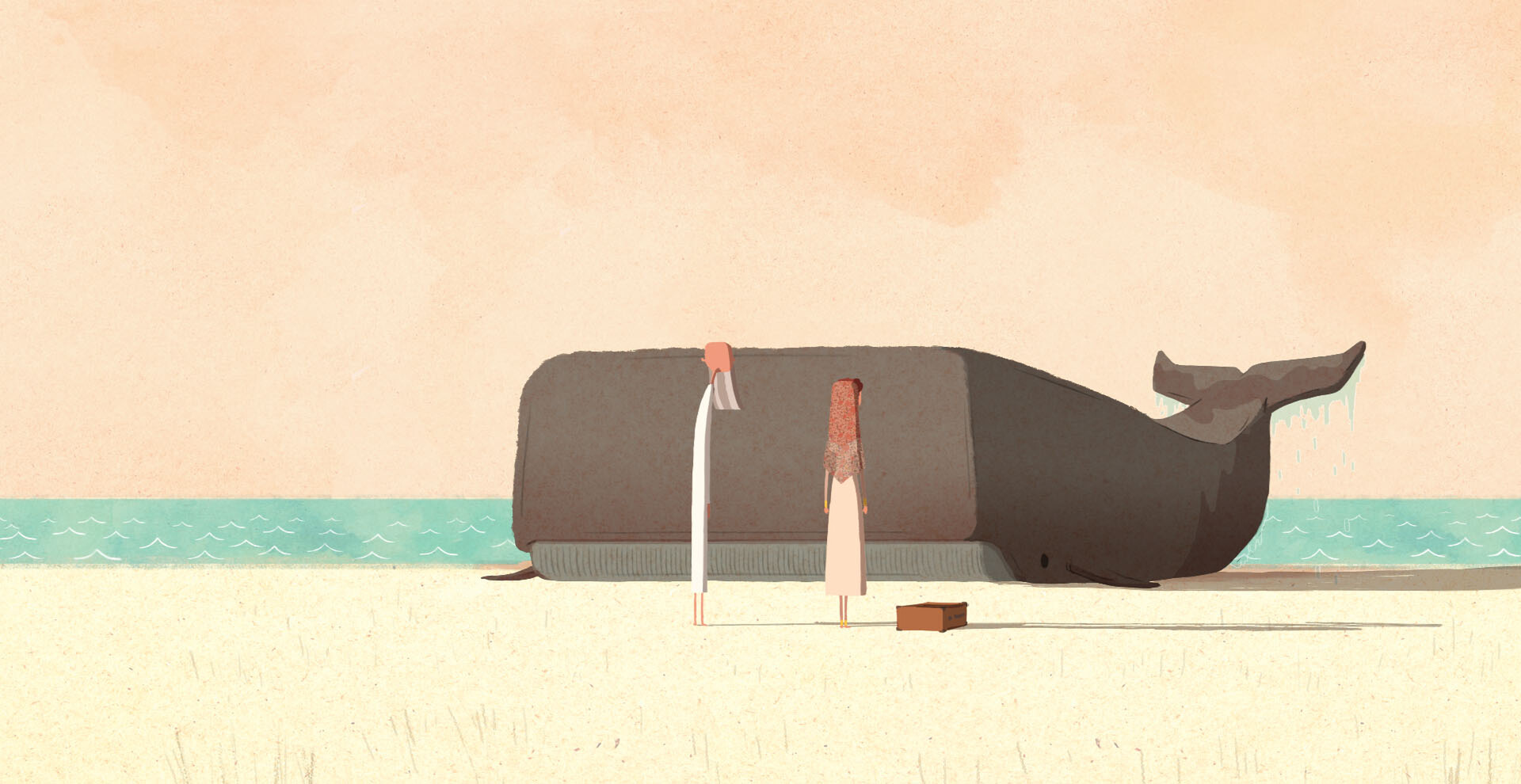
Compelling and sometimes tough to watch. This wordless story introduces us to a man and his adult daughter, clearly at a crisis point. We see evidence of regular violent outbursts and sorrow. The weeping young woman has prepared dinner for her father and has packed her bags to leave, clearly unable to cope any longer. She opens the door. He hangs his head and does not try to stop her. And on the beach in front of their house they see a stranded whale.

Both run to the whale to try to help it, digging sand from beneath it, tying a rope to the tale and trying to use a small motorboat to pull it back into the water. When that fails, the father continues out to an offshore shipwreck and stays while the daughter tries to keep the whale wet and cool as the day heats up. On board the shipwreck, we share in flashbacks to an aerial attack, gunshots, explosion, a drowning woman and a small child. Both father and daughter continue to work to rescue the whale – the daughter struggling on her own, the father forming a daring plan between his devastating flashbacks.

The animation makes effective use of simple lines and movements and soft, pale colors. The story’s conclusion is both triumphant and heartrending. A well-told tale, definitely not light entertainment.

France/Belgium/UK/Netherlands: Wander to Wonder

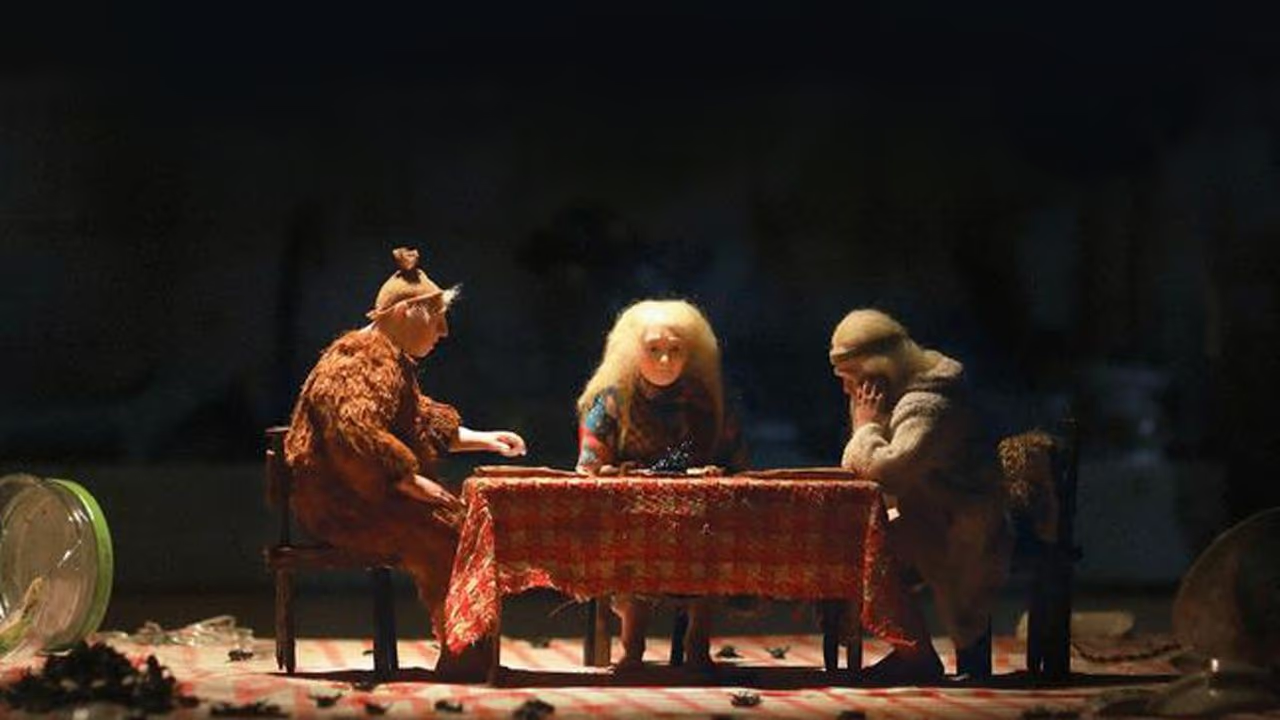
For me, this is the film that lingers. It opens with a clearly worn-out recording of a children’s TV show. We see an older man talking with small furry creatures living in a miniature woodland setting. Think of Captain Kangaroo or Mr. Rogers talking with their puppet friends about their activities and what they’re learning. Flies often buzz past the screen as the show plays.

We meet three very small aging characters wearing scraps of clothing, including remnants of the furry costumes seen in the old video. One male character runs around in no pants, quoting Shakespeare. The female reads old letters from children who wrote in to the TV show and tries to record new shows. The other male bumbles around and smiles vaguely, looking like a lost street performer. They work hard to break open a pickle jar and then share a pickle for dinner. Flies are present in most scenes. We eventually see a pair of shoes on the floor, still on the feet of a motionless body. Among their various activities, a crisis arises which brings about devastation and, just maybe, new possibilities.

This short film evidently took 8 years to make. The animation is incredible. I’ve never seen such lifelike movement in a stop-motion film. It was hard to shake the notion that I was watching actual tiny people. I came away unsure whether the story was about aging, coping with death and/or change, pursuing one’s purpose in life, imagination and reality – or all of that and more. It was mesmerizing, disturbing, wistful, hopeful. I found it powerful and unforgettable, even though I’m still not exactly sure why. If I had to choose which film I thought was the best, it would be this one.

France: Yuck!

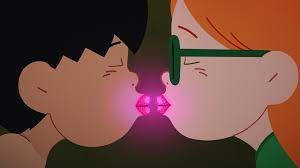
This film was cute and easy to watch. More like a traditional cartoon than any of the others. Young kids at a very crowded campground, playing together and getting grossed out by anyone engaging in public displays of affection – especially kissing.

Not surprisingly, a couple of the kids are secretly not so grossed out by the idea of kissing and much of the film is about how and when they’re going to get together to try it out. Throughout the film, lips glow pink whenever someone feels the urge. Again, it’s cute.

Not much more to say about this one. It was cute, colorful, mildly entertaining. As far as I could see, the message is that people love love and it’s not gross.

Belgium/France/Netherlands: Beautiful Men

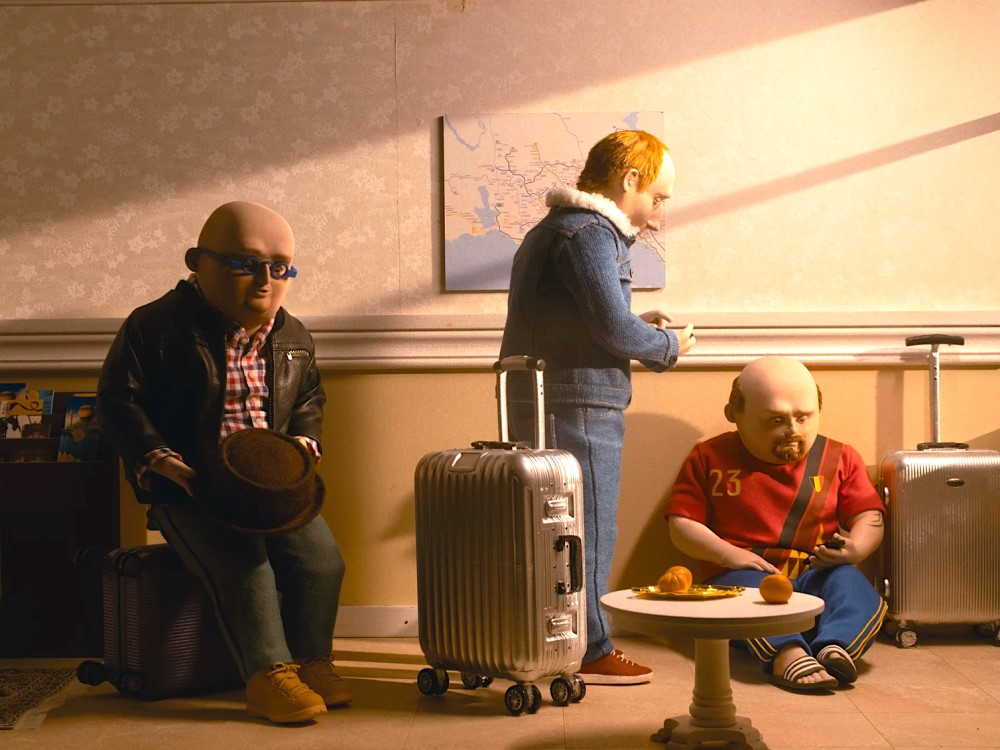
Interesting and unusual topic for an animated film. Three European brothers are in Turkey for hair transplants. There’s a mixup and it looks like only one will be able to get the surgery done.

In the meantime there are some brotherly discussions and some arguments about relationships, about health scares, but not really much discussion about the reasons for wanting hair transplants. They mostly spend their time waiting and talking. But we do get to see the eventual outcome of their trip.

Another excellent use of stop-motion animation, in a very real-looking setting. Facial expressions, emotions and activities come across as natural and genuine. Very well done, but again, seems an unusual topic for animation.

While I enjoyed these short animated films, I couldn’t help wondering about the reasons behind choosing animation to tell these stories, especially stop-motion, which can take a long, long time to complete. It seems unlikely that these films will become widely known or commercially successful. Is it the artistic challenge? A chance to advance filmmaking in general? A simple love of the art form? Or just the best way to tell the stories the filmmakers wanted to tell?

I’m not sure, but I’m glad I saw them. May the best film win.

My private Oscar race

I love movies. I grew up watching a lot of movies, probably because my mom loved watching them. When we were little, I think kids’ matinee tickets cost 25 cents, so Mom would pile all four of us into the car and we’d go to see pretty much any Disney film that was playing. She’d carry in a big knitting bag like it was her purse, filled with popcorn in a Tupperware container and bottles of Pepsi. It was great fun.

Before multiplexes were the norm, we watched our Disney films in style at a fancy old-style theater with a balcony, velvet curtains across the screen and big pipe organ that rose up out of the floor. A man in a uniform stood at the door to gather our tickets. He would tear them in half and hand the ticket stubs to my younger brother saying, “The gentleman always carries the stubs.”

Now it’s hard to even imagine that up until my late 20s, the only way I could watch movies was in a theater or on one of the broadcast television stations, which could only show movies that had been around for a while. We basically had five channels to choose from: ABC, CBS, NBC, Fox and PBS. Cable TV existed, but I don’t think we had it till our son was in middle school. If you couldn’t go to the theater when a film was showing or you missed it when it was on TV, you just missed it.

When video rental became a thing and VCRs were easy to buy, I was in heaven. We could watch movies at home when we wanted, go back to old films that we’d always wanted to see, with no need for a babysitter. Perfect. I bought a big movie guide to help me find quality films to rent and would bring home a stack of videos each weekend – many of them in black and white and/or with subtitles. My husband and son jokingly called it my “film school.” Then Netflix appeared and I could have DVDs mailed to me with no due dates, just mail them back when we were done with them. No more late fees and no need to chase my toddler daughter around Blockbuster anymore. Even more perfect.

Now that streaming is so readily available it’s easier than ever to watch almost any movie we can think of – which is amazing – but as soon as we became empty-nesters, free to go out to the movies whenever, we found outselves a nice theater with a wait staff that brings food and drinks to our seats. (Usually the same seats every time – on the end of the first row behind wheelchair accessible seating – kind of like first row balcony.) We go often enough that we get a lot of free tickets through the theater’s rewards program, plus some staff members recognize us and ask what we’re seeing. I’d say it’s a fun night out, but hey, we don’t like staying out late so it’s more like a fun afternoon out.

We’ve always enjoyed watching the Oscars, and decided it would be more fun and interesting if we were actually familiar with more of the nominated movies. So over the past several years, my husband and I have made an effort to see as many likely Oscar nominees as we can before the presentation of the awards. I follow the buzz about likely contenders, we assess the films for ourselves, try to predict nominees and winners, as well as choose who we think should win.

We usually don’t go out of our way to see all of the animated feature films, and we don’t bother with documentaries. We don’t really care about films that are nominated simply because they have one good new song, though we do care about original score. And if there are any films that we just don’t want to see for whatever reason, we skip them. We used to ignore all of the short films, but I recently discovered that for the past 20 years, ShortsTV has packaged the Oscar-nominated short films for release in theaters, so this year we decided to check them out. We attended two showings – five animated short films and five live-action short films.

This year the Oscar nominations are spread across 50 films, which includes 15 short films. (And not including whatever science and tech awards they give out ahead of time.) So, how many films did we watch to get ready for the 2025 Oscar ceremony?

  • We’ve seen 35 of the nominated films
  • We skipped 5 films due to lack of interest, as well as all 10 documentary films
  • Plus prior to the nominations, we watched 23 films that we thought might be considered

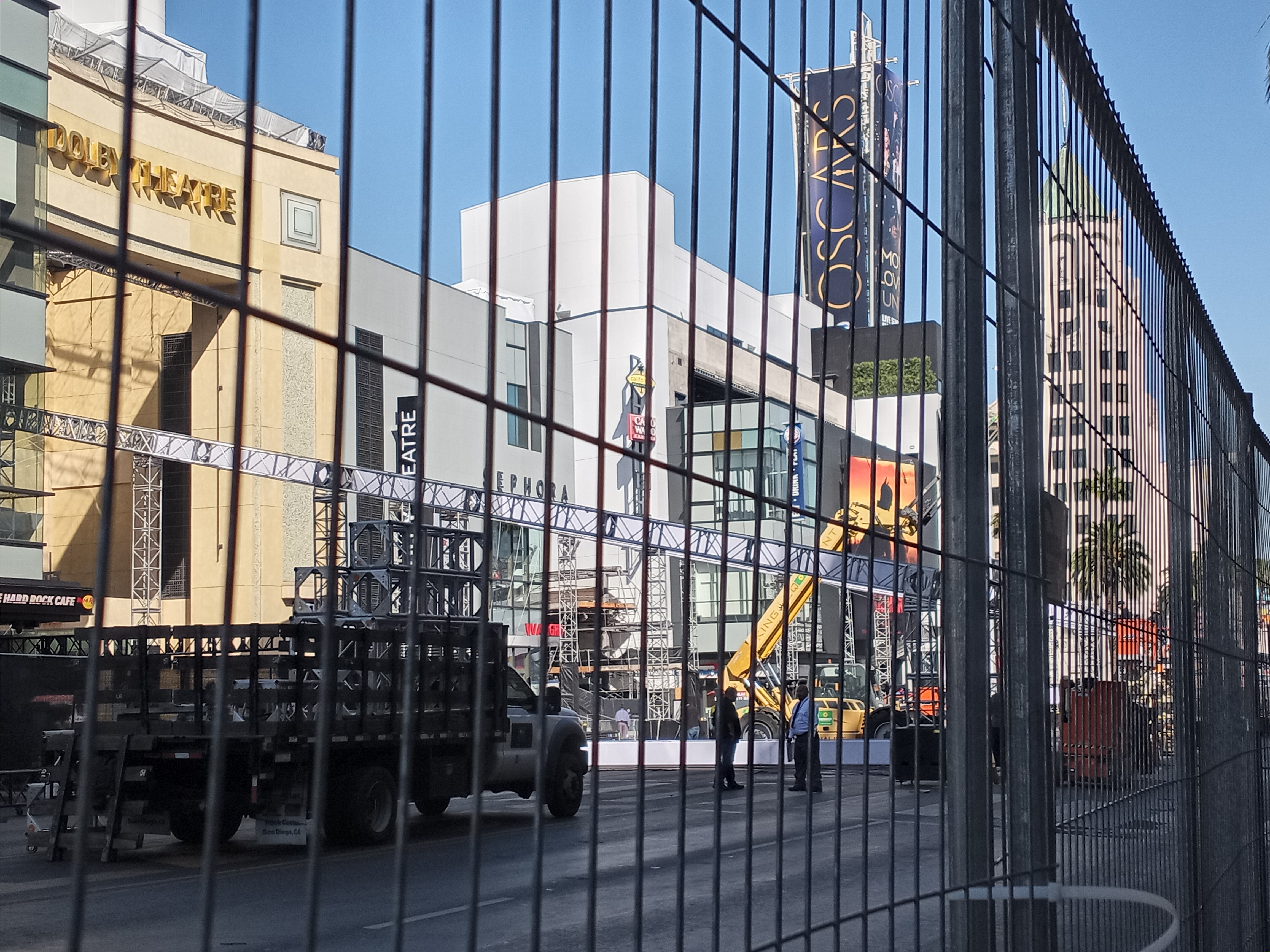
So after putting in all that time, my own private Oscar race will take place over this coming week, as I work to gather my thoughts and post some observations about the nominated films before the awards are handed out at the Dolby Theater – which is housed in the Hollywood Boulevard shopping mall pictured below.

It’s likely the whole block presently looks a lot more like my pre-Oscars photo from a few years ago as they glam things up for the big night:

I’ll close this intro to my Oscar observations (Oscarvations?) with my favorite fact learned during a tour of the Dolby Theater. A lot of the nominees – especially those favored to win or who are at least sure to be on camera lot – get ready at the theater. So they get dressed, get hair and makeup done, get in a limo at the back of the mall and drive around the block to be dropped off at the red carpet.

And the nominees are….. (to be continued)

Communication – or maybe just sound and fury

There’s something happening here. What it is – not exactly clear. There’s a guy with a phone over there, telling me – what? Do I need to beware?

.

He could be doing almost anything with that phone – texting, reading, working, shopping, watching a movie, setting the thermostat at home, checking on his pets..

He might as easily be scamming, catfishing, trolling, hacking, spreading conspiracy theories, committing hate crimes.

But is he using that phone to actually talk to anyone?

Within the relatively short time frame of my adult life, the expansion of communication technology has significantly changed the way the world goes about its daily business. Sure, things like TV, satellites, telephones and computers, and even a fledgling internet existed long before I was on the scene, but for about 100 years all of those ingenious ways of creating person-to-person connections and transmitting information changed and improved and gained popularity, gradually coming together like a technological snowball, building up mass and speed as it rolled over the world in a massive avalanche.

When that avalanche hit, it provided us with the ability to see and hear events around the world as they happen. To easily talk face-to-face with people no matter what country they’re in – or even if they’re in space.

But if you need stuff and you’re not in the mood for talking, pretty much anything you need can be chosen, purchased and delivered directly to your home without you needing to interact with anyone.

Instead of standing in line hoping to get tickets for current movies or making sure we’re at home when our favorite TV shows are on, we can stream whatever we want to watch whenever and wherever we want to watch it.

We’re no longer at the mercy of radio stations, listening to whatever music they deem worthy of airtime, but can listen to our favorite songs from any time period, shuffling them into whatever type of playlist we want. And instead of waiting and hoping for a rare appearance by our favorite band on a TV variety show, we have our choice of platforms to see their performances anytime. We can keep up with their activities on social media and even leave comments for them.

Entering a few words into Google will get us information when we need it. And for serious fact-finding, remote access to academic or scientific databases allow for research and collaboration without necessarily traveling to a library or lab. But if you do find you need to travel, all you need is the address – there’s no need to ask for directions or keep a road atlas in your car.

All of these changes are huge on their own, but the fact that we can do it using something we can carry around in a pocket – it still seems a bit magical to me. And I doubt if I’m the only one who feels that way – remember Back to the Future: Part II? In 1989, the filmmakers imagined a 2015 with flying cars and self-tying shoes, but when Marty McFly’s son needs to call someone when he’s out and about, he has to find a phone booth. They do have a video phone at home, but it’s gigantic, mounted on the wall and attached to a fax machine.

I’ve become as reliant on all of these technological conveniences as anyone else and I know there’s no going back, but I wonder even now – are we actually ready for it all? Perhaps more importantly, though a bit late to contemplate – is it even good for us?

As much as I love having information at my very fingertips and multiple forms of entertainment on demand, I sometimes miss the specialness of waiting and planning for a TV show or movie that I know only comes on once a year, or the excitement of seeing a favorite performer in a rare TV appearance. But I don’t miss it enough to give up on the instant gratification provided by connectivity. Still, I sense that the easier it becomes to express our own ideas, the worse we become at taking the time to understand what others are thinking.

It seems like it should be useful and positive, this ability to learn about people and events around the world in real time. Unfortunately, ability to spread information and ideas quickly is not necessarily connected with reliability. But sometimes it’s just too easy to see or hear something and assume it’s true, to believe that people are being honest. Who has the time to check sources for everything? If information is sensational, shocking, humiliating or nonsensical, it may well go “viral” – a word that for its first 50 years of use implied the spreading of disease, a meaning that is uncomfortably appropriate when applied to some widespread messages/videos.

The ease with which we accept viral news, no matter how unsubstantiated, is nothing new. The sentiment that “there’s no smoke without fire,” implying that any bit of juicy gossip must have some truth behind it, was recorded as early as the 14th century. Just because we can hear about more information more quickly than we could 700 years ago, doesn’t mean we have to be any more thoughtful about the dangers of handling it carelessly.

Depending on how much you put yourself out there, your comments on social media might be seen by what – hundreds? thousands? millions? Comments that maybe should be made face-to-face to one or two people, whose reactions you could see and hear immediately, giving you a sense of how your message is coming across. But it’s just too easy to comment from a distance, to have the freedom to make your point when you want to, without anyone interrupting with their own observations and opinions.

And if anyone does object to what you’re saying, you can search for and find a space with like-minded people, folks who share your concerns. A space where you can exist in a bubble of agreement and remain convinced that you’re right and those who disagree with you are wrong.

Or you can be like me and hide from social media to avoid crossing the battle lines being drawn, at this time when the US is divided not-very-neatly in half, with each half refusing to accept that the other half might be right about anything. And if nobody’s right, then everybody’s wrong. I’m very much afraid that’s what we’re stuck with, no matter what happens politically in the coming months.

I may have seen amazing advances in communication technology in my lifetime, but it seems unlikely I’ll live long enough to see us learn how to use it to really understand and appreciate each other.

Living memory

I find myself thinking more and more often about what we lose to living memory when entire generations age and die – information for which we can no longer just find someone and ask about the details. Maybe it’s because I listen to a lot of history podcasts. Maybe because my parents and grandparents are gone and not available to answer questions.

Or maybe it’s just because I’m on the youngish end of a generation that will still have some hardy folk available for questions for another 40 years or so, but then the progeny that exploded from the post-war baby boom will be, as they say – history.

It’s still a little weird to think of even my great-grandparents as being firmly out of reach. I mean, they’re right there in photos that include my young self, and they were always very much a part of my parents’ lives and their stories. But the youngest of them was born in 1885, so yeah – their lives are the stuff of history.

I had two great-grandmothers who were still alive when I was a teenager, and I wish I had had the sense to ask them so many questions about what their lives were like when they were young that they would get sick of it and encourage me to go read a book – which was what I was most likely doing instead of pestering them.

They would have been the last generation in the US to know a world before the emergence of cars, telephones and electricity – possibly wondering if those crazy new things would ever really catch on and be of practical use. By 1890, when my great-grandparents were young children, all of those modern conveniences had been invented, but in those days my family on both sides were farmers, so that expensive new-fangled stuff wouldn’t be part of their lives till around the time they were getting married and raising families.

Think about it – even in our post-apocalyptic stories like The Walking Dead, people still find ways to generate power and get cars going. Journals and handbooks from my great-grandparents’ generation would likely be great resources for how to survive disastrous events.

When I think of my grandparents – all born between 1903 and 1912 – I can’t help but hope that they will be the last US generation to ever have memories of two world wars, with a Great Depression sandwiched between them. Both of my grandfathers were too young for the first war and too old for the second, but they were farming during the depression years. And again, I didn’t take advantage of the ability to learn more about their experiences, thinking instead about how odd it was that my grandmother saved everything – things that I threw away without a second thought.

Both my parents were born in 1935, right in the middle of those Depression years. Born at home on the farms where their families lived and worked. Being so young at the time, my parents had no bleak stories to tell about the last years of the Great Depression – their memories were of loving parents and grandparents and fun times with nearby cousins. They did, however, make frequent references to radio programs that they listened to when they were young, and I figure their generation would have been among the last to have memories of those days when the radio was a major piece of furniture in the home, a key provider of news and entertainment. I remember thinking that some of the programs they mentioned sounded amusing and fun, but since I had television, it just seemed a bit quaint and quirky – obviously inferior to what I had for my own entertainment. But what a wonder radio must have been, especially in rural homes where in many cases, electricity and telephones must have still seemed like luxuries. But they never talked about those things like they were anything special – and again, I never asked. I also never asked about an event that my parents must have had some memory of – they were 6 years old when Pearl Harbor was attacked. I know those broadcasts took over the radio waves, and I’m sure my grandparents would have been listening. Were my young parents frightened? Confused? Annoyed that they couldn’t listen to their favorite programs? I’ll never know.

One reason I’m sure they would have had some reaction – I was 5 years old when President Kennedy was assassinated, and I remember it. Because of course, it interrupted my TV watching. Not that I particularly watched soap operas at that age, but my mother did, so the television would have been on when the black background of the news bulletin filled the TV screen. That was always enough to grab attention and make everyone nervous. My real memories are likely more related to the funeral and other coverage that would have cancelled my cartoon watching for the day. But I do remember it, and there can’t be anyone much younger than me who does.

A happier event that I remember seeing when I was 5 years old is the live performance by the Beatles on the Ed Sullivan Show. And I can tell you, I was so excited that I watched it from behind Highlights magazine because I didn’t want my parents or grandparents to see just how excited I was (I’m not sure why). I already loved the Beatles passionately, after listening to them on the radio during naptime. And I never lost the thrill of listening to them.

One more TV-related event that I must be among the youngest to remember is the switch from all programs being broadcast in black and white to all programs being broadcast in color – I was around 7 years old when that happened. We didn’t have a color TV at the time, but we had family and friends who did, so that definitely added to the fun of spending an evening with them.

While we Baby Boomers will be the last to remember those early years of television, the older Millennials, like my son, will be the last to remember life before the internet. Born in 1984, he was old enough to be using the computer, learning about dial-up access when the World Wide Web went public – those dark days when you still needed some kind of disk to do most things, before Wi-Fi, before streaming, before seemingly everything was available online. Really, before “online” was even a common term. My daughter, 15 years younger than her brother, has never known life without those things. She learned keyboard skills in kindergarten – something for which I took an entire year of typing class in high school.

Now I have a grandson, born in 2022. And I wonder what he will remember years from now, about things that were brand new, or became obsolete when he was young. Will he remember riding in cars as a child and wonder what it must have been like to actually drive one, rather than simply entering coordinates and pressing a start button? Maybe he’ll have fond memories of shopping in stores with his parents as he submits home-delivery orders for everything he needs.

Will he have only vague memories of a country once known as the United States of America? Will his high school textbooks report that it was a country that worked at being a democracy for a couple of centuries, until its citizens could not agree on just what that meant and it collapsed into chaos and war?

I’m hoping that none of his future memories resemble those comments made by a frustrated grandma. And I can’t help but wonder if, like me, too many folks – older and younger – have neglected to ask important questions of people with experiences and opinions that are now out of our reach. People who are gone who could have provided information and guidance that was never recorded in any way, but was always available for the asking.

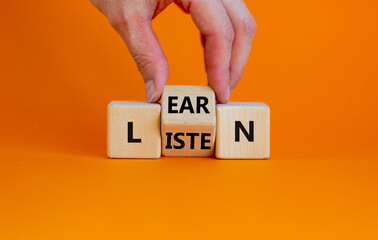
Maybe the important thing is just taking the time to ask questions and listening to the answers.

Senior minute

I started this blog more than a year ago, hoping to use it to share some of my deeper day-to-day musings. Not just entertaining or poignant little bits that I typically post on my other blog, but potentially thought-provoking, possibly unsettling, maybe even controversial ideas that have crossed my mind. Thoughts that might show that not all Baby Boomers are sitting around complaining about kids these days (ridiculous and impractical, since most of the world’s population is now within the age range that could be my kids or grandkids), or how things were better back in my day (whatever that means – lots of things are better now, some things still need a lot of work – it’s called life).

Why put such thoughts here rather than in the blog that I’ve used for years? I wanted a space that people might come across by accident as they browse, without needing to go through the WordPress site. It feels a bit more – what? Anonymous? I’m not sure that’s exactly what I wanted, maybe more a space where friends and relatives were less likely to come by, expecting my usual whimsical or sentimental or humorous posts.

So why have I written nothing here in more than a year? I’ve definitely had some controversial thoughts I considered important enough to share. But I didn’t, either because I felt so strongly that I was afraid I wouldn’t do the topic justice, or because I had a hard time pinning down what it was I felt needed expressing. Maybe I was simply afraid someone might read it.

My other blog is actually called “Read Me.” Sounds a little desperate maybe, or like part of the technical documents within computer programs. But it’s inspired by Alice’s Adventures in Wonderland – like the tiny bottle and cake labeled “Drink me,” “Eat me,” that end up having a rather dramatic impact on Alice’s activities. So I do want to be read. But in that blog, I aim to please. It’s a bit of a performance, playing to a mostly-known audience.

But this, I hope it will be closer to a journal, recording what is going on in my head as the world goes on around me. And to be successful, it has to be written here, in a space where someone might possibly read it. I’ve tried keeping hand-written journals in the past, and I’m crap at it. I start out fine, eventually start to ramble and ultimately become incoherent, even to myself.

I need to know someone is going to check my work – otherwise my brain just doesn’t care and I get lost in the literary weeds. So whether or not anyone ever stumbles across what this particular boomer is rambling on about, there is a small chance that someone will.

So if you’re here, thanks for stopping by. I’ll try to be a lot quicker with the next post.

Talkin’ ’bout my generation

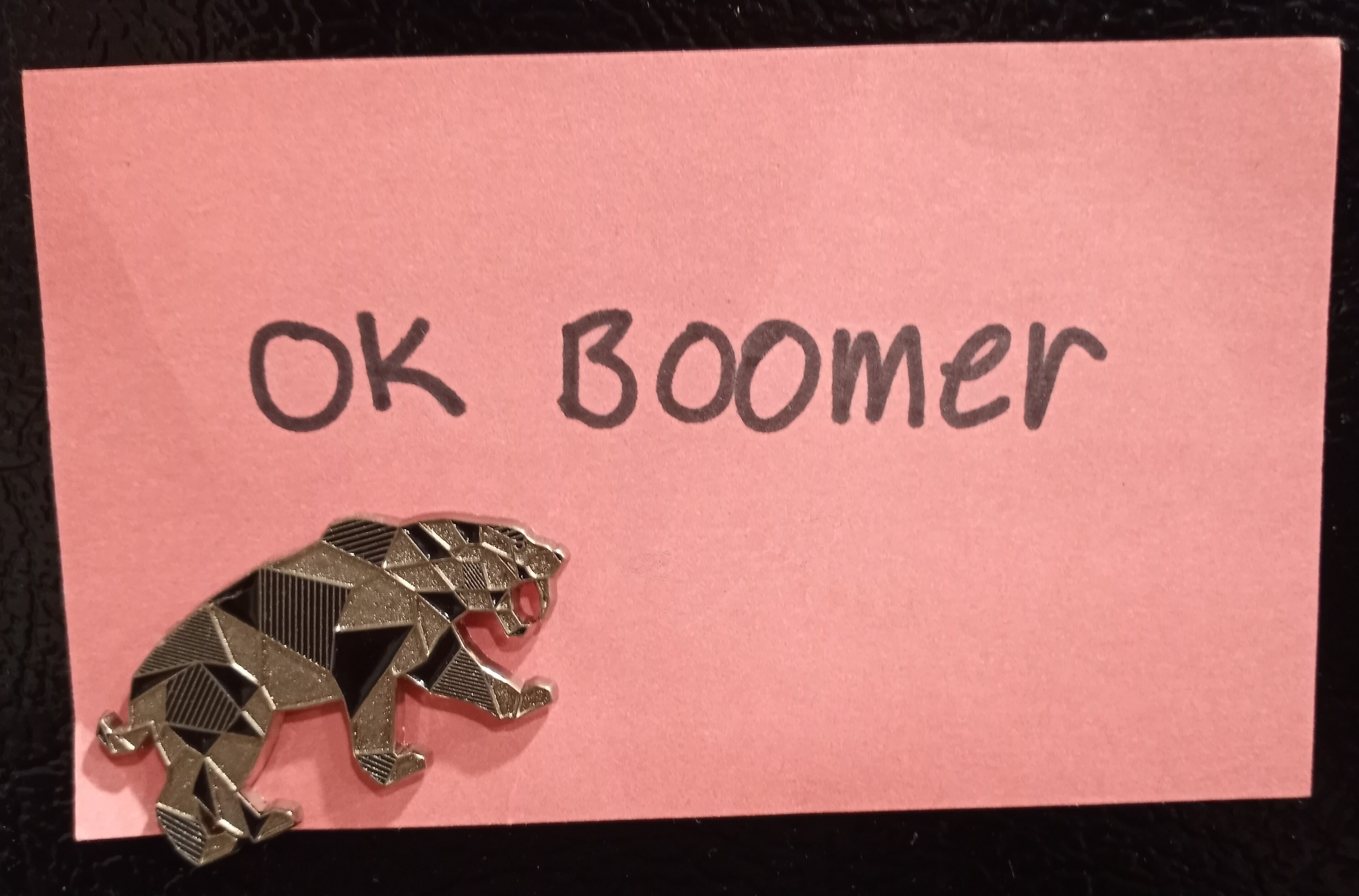
I was first introduced to the phrase OK Boomer a few years ago during a museum visit with our Gen Z daughter. I have no recollection what my husband said to bring it on – but it was at the very least, a “dad” type of comment. After he said whatever it was, our daughter handed him a slip of paper with “OK Boomer” written on it. It was from one of her friends who was unable to accompany us on this particular trip, but she didn’t want to miss the chance to insert the gibe when the appropriate chance presented itself – as she was sure it would.

We thought it was quite funny. Even stuck it on the fridge with a magnet we bought at the museum. An acknowledgement of our shift into becoming, while not yet the oldest folks around, firmly part of the grandparent crowd. We get it. Taking a poke at someone in a different generation is traditional, expected – possibly mandatory. It’s been going on for millennia – basically as long as there has been more than one generation.

Sometimes “OK Boomer” goes through my own head in response to things I hear my contemporaries say or do. Sometimes because it’s funny; sometimes not so much. Occasionally it strikes me that I deserve an “OK Boomer”, a friendly reminder that maybe I should think again about my reaction to a situation. Are my perceptions based on out-of-date information or resistance to change? Have I simply not been paying attention to things? Or is my assessment appropriate but I need to find a fresh way to communicate my thoughts?

When it comes down to it, I think we all need some type of prompt to make us think about things before reacting in frustration or anger. And I don’t think that’s just a grandma type of attitude – since childhood I’ve been more of a can’t-we-all-just-get-along kind of person. Of course long before I reached the grandma stage, I understood that everyone getting along was never going to happen. But a Boomer can still dream.

I actually kind of like the sound of OK Boomer – it’s such a catchy phrase (though it’s good that the “Baby” part was easily dropped – we’re a bit past that). OK Gen X or OK Silent Generation doesn’t roll off the tongue quite as easily. Makes me wonder what phrases Generations Alpha and Beta will come up with to goad their elders.

It could be something similar to OK Boomer, using an expression that might, on the surface anyway, be interpreted as a positive. (Are you feeling OK Boomer?; Hey, you’re really OK Boomer.) But when said with a dismissive tone, a certain drawing out of the words, the phrase has more of an I’m-OK-you’re-definitely-not-OK implication. Maybe in 20-30 years they’ll say something like Exactly, Gen X; Meanwhile, Millennial; Amazing, Gen Z.

But I suppose the Alphas and Betas will figure such things out for themselves. And they will do it. It’s more or less a birthright – they were born, so they have a right to complain about the people who have been running things, telling them what they should or shouldn’t do. And by the time they’re old enough to question their elders, the Boomers will be a bit too elder to bother with, so they’ll direct their comments toward their own parents and grandparents.

When we Boomers were growing up, the derogatory phrase was a bit longer but still memorable, easy to latch onto: Never trust anyone over 30. Actually a bit harsher than something like OK Boomer, applying to pretty much anyone in charge of anything.

Newsworthy in 1968

And maybe we were a bit harsh in our reactions to the powers that be. According to a Wikipedia entry I just read, the Boomer generation drove social scientists to develop a whole new theory about the “generation gap” because us darn kids seemed determined to like whatever our parents didn’t like, or not like what they did like – whether it be music, core values, political views, cultural tastes, clothing styles, hair length – whatever. The term “generation gap” was used so often when I was young that I assumed it had always been a well-known concept. I didn’t realize I was part of creating it.

Not that I believe we are responsible for inventing the generation gap. I’m sure it was always there – but maybe there were just so many of us all at once that the need for some sort of bridge was more obvious.

And so here we are, now on the far side of that gap. Not sure if that means we somehow crossed a bridge or if a chasm developed behind us while we were looking the other way. At any rate, we’re now old enough to mistrust our own over-30 children.

In 2019, The New York Times published an article titled, “‘OK Boomer’ Marks the End of Friendly Generational Relations.” According to this article, it sounds like Boomers may have started the fight, with your basic “kids these days” rants, basically complaining that teenagers and young adults are, well…..young. And they have the nerve to be doing things differently from the way their parents and grandparents did them. Such rants are made all the worse because they’re not just shouted from the front porch at kids in the neighborhood – they go viral on social media and are essentially shouted at any young person with a phone.

So Gen Z-ers got creative and entrepreneurial, and retaliated by putting their snappy phrase on t-shirts, sweatshirts, hats and other merchandise to make sure older folks know, “You’re not the boss of me.”

One quote from a 19-year-old grabbed my attention, mainly because with minor wordsmithing, it reads exactly like something that might have appeared in that Life magazine article from 1968, when many Boomers were teens:

“The older generations grew up with a certain mindset, and we have a different perspective,” Ms. O’Connor said. [all young people of every generation said]. “A lot of them don’t believe in climate change [civil rights/women’s rights/getting out of Vietnam] or don’t believe people can get jobs with dyed hair [long hair] and a lot of them are stubborn in that view. Teenagers just respond, ‘Ok, boomer.’ [Chill out man] It’s like, we’ll prove you wrong, we’re still going to be successful because the world is changing [the times, they are a-changin’].”

I’m not sure whether I’m saddened or encouraged by the fact that generation-based gripes never really change.

It seems natural for younger generations to want to shake things up a bit, to have new ideas, to see a different way forward. To know that they see things that their elders don’t see and to be confident that their changes will benefit society, improve the world. Such an attitude may be hardwired into our brains, triggered by adolescent hormonal changes. An evolutionary advantage perhaps – survival of the surest.

It seems natural for older generations, who have done their share of shaking things up and have been shaken in return, to be wary of new ideas. Innovation is great, but experience has taught us that the results are not always what we expect or hope. Dreams keep us going, but past bumps and bruises remind us to keep our eyes open during the pursuit. We learn to roll with the changes, but sometimes wish that the boat didn’t rock quite so much as we try to maintain the balance we’ve worked for. Another evolutionary phase – survival of the cautious.

It seems it should be natural for younger and older generations to listen to each other, take time to learn from each other. To be reminded of the excitement of jumping into something new, or to seek insight from an experienced someone before taking a leap. But it seems the middle ground is often too shaky for holding long conversations.

Back in that Wikipedia article, I learned that instead of a generation gap, social scientists now talk about “institutional age segregation” – which just sounds way too dystopian to me. The phrase is intended to communicate the idea that members of a particular generation tend to stick together, physically separating themselves from folks of other generations, limiting opportunities for interaction across age barriers, at least outside their own households.

And if the only cross-generational interactions we have are with our own family members or via social media rants, then maybe dystopia is not too far off the mark.

I admit I don’t always see the attraction of some of the things Gen Z finds entertaining. I don’t always get their jokes. I don’t always understand the point of a lot of memes/vines/reels/whatever. But I also don’t expect Millennials or Gen Zs to necessarily have the same perceptions of current events that I have. I don’t expect or even wish that they will approach adulthood the same way I did. They were born into a world changed by technology that was really just ramping up well after I was over 30. Gen Z’s fluency in current cultural and linguistic norms goes well beyond familiarity with trends or slang – it’s part of who they are. They are native speakers of a language I learned as an adult.

My husband and I raised two kids – one Millennial and one Gen Z. I count them and several of their friends as my own friends. From what I can see, they take their adulting very seriously. Quite possibly more seriously than I did when I was their age. Generationally speaking, what I’m hearing them say is that everyone should have a voice and should be allowed to find their own best path as they navigate adulthood and the world at large.

With the history we’ve lived through, how can Boomers argue with that?

Disney has convinced us that we live in a small, small world, but it seems to me it’s quite big enough to be going on with. We are confronted with this big old world in a more up-close-and-personal way than ever before, and at the same time, we’re distancing ourselves from people right next to us.

I agree that everyone should have a voice – no matter how old or how young that voice is. But we can’t make sense of those voices unless we listen.