
Communication – or maybe just sound and fury

There’s something happening here. What it is – not exactly clear. There’s a guy with a phone over there, telling me – what? Do I need to beware?

.

He could be doing almost anything with that phone – texting, reading, working, shopping, watching a movie, setting the thermostat at home, checking on his pets..

He might as easily be scamming, catfishing, trolling, hacking, spreading conspiracy theories, committing hate crimes.

But is he using that phone to actually talk to anyone?

Within the relatively short time frame of my adult life, the expansion of communication technology has significantly changed the way the world goes about its daily business. Sure, things like TV, satellites, telephones and computers, and even a fledgling internet existed long before I was on the scene, but for about 100 years all of those ingenious ways of creating person-to-person connections and transmitting information changed and improved and gained popularity, gradually coming together like a technological snowball, building up mass and speed as it rolled over the world in a massive avalanche.

When that avalanche hit, it provided us with the ability to see and hear events around the world as they happen. To easily talk face-to-face with people no matter what country they’re in – or even if they’re in space.

But if you need stuff and you’re not in the mood for talking, pretty much anything you need can be chosen, purchased and delivered directly to your home without you needing to interact with anyone.

Instead of standing in line hoping to get tickets for current movies or making sure we’re at home when our favorite TV shows are on, we can stream whatever we want to watch whenever and wherever we want to watch it.

We’re no longer at the mercy of radio stations, listening to whatever music they deem worthy of airtime, but can listen to our favorite songs from any time period, shuffling them into whatever type of playlist we want. And instead of waiting and hoping for a rare appearance by our favorite band on a TV variety show, we have our choice of platforms to see their performances anytime. We can keep up with their activities on social media and even leave comments for them.

Entering a few words into Google will get us information when we need it. And for serious fact-finding, remote access to academic or scientific databases allow for research and collaboration without necessarily traveling to a library or lab. But if you do find you need to travel, all you need is the address – there’s no need to ask for directions or keep a road atlas in your car.

All of these changes are huge on their own, but the fact that we can do it using something we can carry around in a pocket – it still seems a bit magical to me. And I doubt if I’m the only one who feels that way – remember Back to the Future: Part II? In 1989, the filmmakers imagined a 2015 with flying cars and self-tying shoes, but when Marty McFly’s son needs to call someone when he’s out and about, he has to find a phone booth. They do have a video phone at home, but it’s gigantic, mounted on the wall and attached to a fax machine.

I’ve become as reliant on all of these technological conveniences as anyone else and I know there’s no going back, but I wonder even now – are we actually ready for it all? Perhaps more importantly, though a bit late to contemplate – is it even good for us?

As much as I love having information at my very fingertips and multiple forms of entertainment on demand, I sometimes miss the specialness of waiting and planning for a TV show or movie that I know only comes on once a year, or the excitement of seeing a favorite performer in a rare TV appearance. But I don’t miss it enough to give up on the instant gratification provided by connectivity. Still, I sense that the easier it becomes to express our own ideas, the worse we become at taking the time to understand what others are thinking.

It seems like it should be useful and positive, this ability to learn about people and events around the world in real time. Unfortunately, ability to spread information and ideas quickly is not necessarily connected with reliability. But sometimes it’s just too easy to see or hear something and assume it’s true, to believe that people are being honest. Who has the time to check sources for everything? If information is sensational, shocking, humiliating or nonsensical, it may well go “viral” – a word that for its first 50 years of use implied the spreading of disease, a meaning that is uncomfortably appropriate when applied to some widespread messages/videos.

The ease with which we accept viral news, no matter how unsubstantiated, is nothing new. The sentiment that “there’s no smoke without fire,” implying that any bit of juicy gossip must have some truth behind it, was recorded as early as the 14th century. Just because we can hear about more information more quickly than we could 700 years ago, doesn’t mean we have to be any more thoughtful about the dangers of handling it carelessly.

Depending on how much you put yourself out there, your comments on social media might be seen by what – hundreds? thousands? millions? Comments that maybe should be made face-to-face to one or two people, whose reactions you could see and hear immediately, giving you a sense of how your message is coming across. But it’s just too easy to comment from a distance, to have the freedom to make your point when you want to, without anyone interrupting with their own observations and opinions.

And if anyone does object to what you’re saying, you can search for and find a space with like-minded people, folks who share your concerns. A space where you can exist in a bubble of agreement and remain convinced that you’re right and those who disagree with you are wrong.

Or you can be like me and hide from social media to avoid crossing the battle lines being drawn, at this time when the US is divided not-very-neatly in half, with each half refusing to accept that the other half might be right about anything. And if nobody’s right, then everybody’s wrong. I’m very much afraid that’s what we’re stuck with, no matter what happens politically in the coming months.

I may have seen amazing advances in communication technology in my lifetime, but it seems unlikely I’ll live long enough to see us learn how to use it to really understand and appreciate each other.
Living memory

I find myself thinking more and more often about what we lose to living memory when entire generations age and die – information for which we can no longer just find someone and ask about the details. Maybe it’s because I listen to a lot of history podcasts. Maybe because my parents and grandparents are gone and not available to answer questions.

Or maybe it’s just because I’m on the youngish end of a generation that will still have some hardy folk available for questions for another 40 years or so, but then the progeny that exploded from the post-war baby boom will be, as they say – history.

It’s still a little weird to think of even my great-grandparents as being firmly out of reach. I mean, they’re right there in photos that include my young self, and they were always very much a part of my parents’ lives and their stories. But the youngest of them was born in 1885, so yeah – their lives are the stuff of history.

I had two great-grandmothers who were still alive when I was a teenager, and I wish I had had the sense to ask them so many questions about what their lives were like when they were young that they would get sick of it and encourage me to go read a book – which was what I was most likely doing instead of pestering them.

They would have been the last generation in the US to know a world before the emergence of cars, telephones and electricity – possibly wondering if those crazy new things would ever really catch on and be of practical use. By 1890, when my great-grandparents were young children, all of those modern conveniences had been invented, but in those days my family on both sides were farmers, so that expensive new-fangled stuff wouldn’t be part of their lives till around the time they were getting married and raising families.

Think about it – even in our post-apocalyptic stories like The Walking Dead, people still find ways to generate power and get cars going. Journals and handbooks from my great-grandparents’ generation would likely be great resources for how to survive disastrous events.

When I think of my grandparents – all born between 1903 and 1912 – I can’t help but hope that they will be the last US generation to ever have memories of two world wars, with a Great Depression sandwiched between them. Both of my grandfathers were too young for the first war and too old for the second, but they were farming during the depression years. And again, I didn’t take advantage of the ability to learn more about their experiences, thinking instead about how odd it was that my grandmother saved everything – things that I threw away without a second thought.

Both my parents were born in 1935, right in the middle of those Depression years. Born at home on the farms where their families lived and worked. Being so young at the time, my parents had no bleak stories to tell about the last years of the Great Depression – their memories were of loving parents and grandparents and fun times with nearby cousins. They did, however, make frequent references to radio programs that they listened to when they were young, and I figure their generation would have been among the last to have memories of those days when the radio was a major piece of furniture in the home, a key provider of news and entertainment. I remember thinking that some of the programs they mentioned sounded amusing and fun, but since I had television, it just seemed a bit quaint and quirky – obviously inferior to what I had for my own entertainment. But what a wonder radio must have been, especially in rural homes where in many cases, electricity and telephones must have still seemed like luxuries. But they never talked about those things like they were anything special – and again, I never asked. I also never asked about an event that my parents must have had some memory of – they were 6 years old when Pearl Harbor was attacked. I know those broadcasts took over the radio waves, and I’m sure my grandparents would have been listening. Were my young parents frightened? Confused? Annoyed that they couldn’t listen to their favorite programs? I’ll never know.

One reason I’m sure they would have had some reaction – I was 5 years old when President Kennedy was assassinated, and I remember it. Because of course, it interrupted my TV watching. Not that I particularly watched soap operas at that age, but my mother did, so the television would have been on when the black background of the news bulletin filled the TV screen. That was always enough to grab attention and make everyone nervous. My real memories are likely more related to the funeral and other coverage that would have cancelled my cartoon watching for the day. But I do remember it, and there can’t be anyone much younger than me who does.

A happier event that I remember seeing when I was 5 years old is the live performance by the Beatles on the Ed Sullivan Show. And I can tell you, I was so excited that I watched it from behind Highlights magazine because I didn’t want my parents or grandparents to see just how excited I was (I’m not sure why). I already loved the Beatles passionately, after listening to them on the radio during naptime. And I never lost the thrill of listening to them.

One more TV-related event that I must be among the youngest to remember is the switch from all programs being broadcast in black and white to all programs being broadcast in color – I was around 7 years old when that happened. We didn’t have a color TV at the time, but we had family and friends who did, so that definitely added to the fun of spending an evening with them.

While we Baby Boomers will be the last to remember those early years of television, the older Millennials, like my son, will be the last to remember life before the internet. Born in 1984, he was old enough to be using the computer, learning about dial-up access when the World Wide Web went public – those dark days when you still needed some kind of disk to do most things, before Wi-Fi, before streaming, before seemingly everything was available online. Really, before “online” was even a common term. My daughter, 15 years younger than her brother, has never known life without those things. She learned keyboard skills in kindergarten – something for which I took an entire year of typing class in high school.

Now I have a grandson, born in 2022. And I wonder what he will remember years from now, about things that were brand new, or became obsolete when he was young. Will he remember riding in cars as a child and wonder what it must have been like to actually drive one, rather than simply entering coordinates and pressing a start button? Maybe he’ll have fond memories of shopping in stores with his parents as he submits home-delivery orders for everything he needs.

Will he have only vague memories of a country once known as the United States of America? Will his high school textbooks report that it was a country that worked at being a democracy for a couple of centuries, until its citizens could not agree on just what that meant and it collapsed into chaos and war?

I’m hoping that none of his future memories resemble those comments made by a frustrated grandma. And I can’t help but wonder if, like me, too many folks – older and younger – have neglected to ask important questions of people with experiences and opinions that are now out of our reach. People who are gone who could have provided information and guidance that was never recorded in any way, but was always available for the asking.

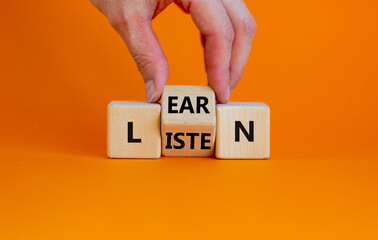
Maybe the important thing is just taking the time to ask questions and listening to the answers.

Senior minute

I started this blog more than a year ago, hoping to use it to share some of my deeper day-to-day musings. Not just entertaining or poignant little bits that I typically post on my other blog, but potentially thought-provoking, possibly unsettling, maybe even controversial ideas that have crossed my mind. Thoughts that might show that not all Baby Boomers are sitting around complaining about kids these days (ridiculous and impractical, since most of the world’s population is now within the age range that could be my kids or grandkids), or how things were better back in my day (whatever that means – lots of things are better now, some things still need a lot of work – it’s called life).

Why put such thoughts here rather than in the blog that I’ve used for years? I wanted a space that people might come across by accident as they browse, without needing to go through the WordPress site. It feels a bit more – what? Anonymous? I’m not sure that’s exactly what I wanted, maybe more a space where friends and relatives were less likely to come by, expecting my usual whimsical or sentimental or humorous posts.

So why have I written nothing here in more than a year? I’ve definitely had some controversial thoughts I considered important enough to share. But I didn’t, either because I felt so strongly that I was afraid I wouldn’t do the topic justice, or because I had a hard time pinning down what it was I felt needed expressing. Maybe I was simply afraid someone might read it.

My other blog is actually called “Read Me.” Sounds a little desperate maybe, or like part of the technical documents within computer programs. But it’s inspired by Alice’s Adventures in Wonderland – like the tiny bottle and cake labeled “Drink me,” “Eat me,” that end up having a rather dramatic impact on Alice’s activities. So I do want to be read. But in that blog, I aim to please. It’s a bit of a performance, playing to a mostly-known audience.

But this, I hope it will be closer to a journal, recording what is going on in my head as the world goes on around me. And to be successful, it has to be written here, in a space where someone might possibly read it. I’ve tried keeping hand-written journals in the past, and I’m crap at it. I start out fine, eventually start to ramble and ultimately become incoherent, even to myself.

I need to know someone is going to check my work – otherwise my brain just doesn’t care and I get lost in the literary weeds. So whether or not anyone ever stumbles across what this particular boomer is rambling on about, there is a small chance that someone will.

So if you’re here, thanks for stopping by. I’ll try to be a lot quicker with the next post.