Bring on the subtitles

Oscar Nominees: International Film

I like watching foreign-language films, taking the opportunity to appreciate the work of filmmakers and actors far from Hollywood. And I don’t mind subtitles – I much prefer them to dubbing by English-speaking actors. Too much of the performance is lost in dubbed films, and a voice that doesn’t fit the face is far more distracting than letters on the screen. The main problem with subtitles is you miss what’s going on if you briefly look away from the screen or get up to do something during the movie. (I remember one time long ago, back when watching TV required sitting in the living room, I was watching The Count of Monte Cristo mini-series in French. I needed to go to the kitchen to work on dinner, so I turned up the volume on the TV – until I remembered that listening to really loud French was not going to help me follow what was happening in the show.)

This year’s nominees take on some pretty tough topics, especially considering most are based on true stories and/or real events. The kind of movies where it’s hard to answer if someone asks, “Did you like it?” Easier to focus on production qualities and storytelling. I’ve listed the films in the order we saw them.
France (Spanish language): Emilia Perez

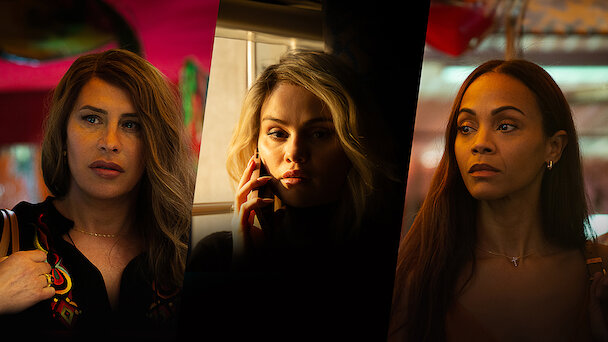
I really did not know what to expect when I saw this film. I had seen it described as a “musical crime film” that included gender reassignment. Not like anything I had seen before. It was not being shown at many theaters in our area, so we had to go a bit out of the way to see it. But it was getting lots of positive press, so I went in with an open mind.

I found the story pretty accessible, easy to get into. A kidnapping scene early on was a bit scary but I was able to go with it. From the start I liked the way music was worked into the film, not as big splashy numbers, but more conversational or explanatory, fitting in with the action. I also liked that the singing wasn’t always performance-perfect, but retained little catches in the voice or slight variations in pitch. The story was engaging and as the drug cartel leader went through what they felt was necessary to change their life, I was interested in finding out how things would develop. And when Emilia wanted to be reunited with her children – children who believed their father to be dead – I felt sure things were not going to go smoothly. And I was right.

I remember that as I watched, I wondered how the film’s focus on drug cartels and people gone missing due to cartel activity went down with Mexican viewers. From what I’ve read and heard, there’s been a lot of criticism and backlash on many levels, including use of Spanish words/phrases which do not reflect Mexican speech. The negative reactions after the initial high praise is unfortunate, but I guess that’s a risk when even one emotionally or politically-charged topic is portrayed in a film, and broad media coverage is rarely likely to keep things calm.

I thought Emila Perez was interesting and well done, but I don’t quite know how to gauge my reactions to it against those from people living in the country represented. I mean, what do I know? For me it’s a form of entertainment, a chance to maybe learn something about people’s lives in another country. But maybe not so much. This won the Golden Globe, but the Oscar? It got the most nominations overall, but seems to have lost some momentum with regard to awards buzz. We’ll soon find out.
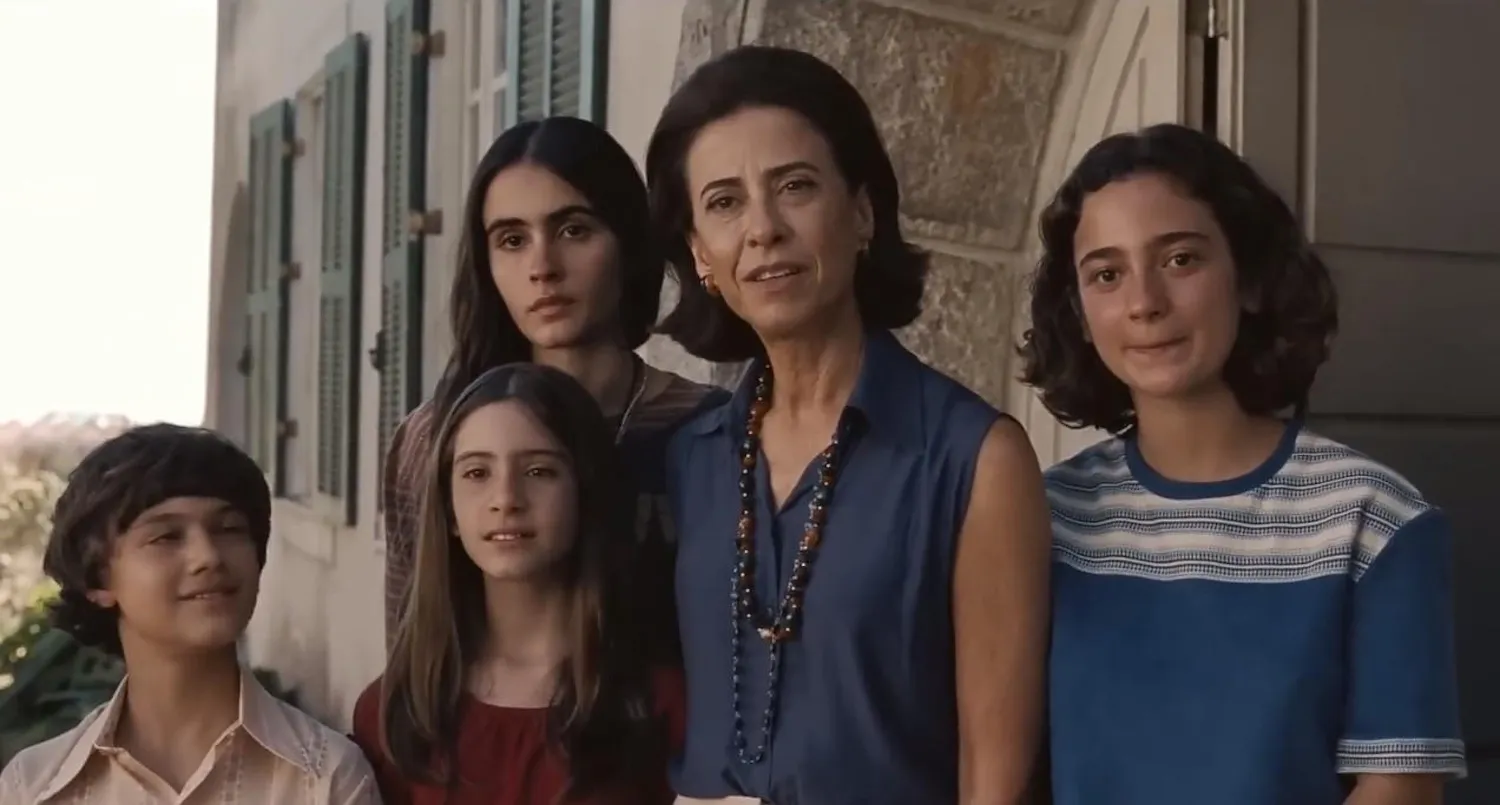
Brazil: I’m Still Here

Seems to be a likely contender for the international feature Oscar, especially since it also received a Best Picture nomination.

This true story was happening when I was about 12 years old. I would have been aware of Brazil as a country, probably aware that there might be some political tensions there, but that’s about it. And it’s not like I know that much about Brazil now. This film does an excellent job of conveying the impact of those political tensions on a family when the husband/father disappears.

On one level, the plot of this film is straightforward. We meet a happy, close-knit family. We don’t know all the details about what has happened previously, but the father talks with some colleagues and obviously becomes concerned. He leaves home and does not return. His wife does all she can to find out what has happened to him while keeping her family together and she eventually succeeds.

That is of course a very simplified description of the film, but I guess what I’m trying to say is that we don’t need to be conversant with Brazilian political history to get into the film. We learn enough as it goes along to make sense of the actions taken, and to understand the fear and concern felt by this ordinary family and the boldness and determination of the wife/mother. The strength of the storytelling is in how it carries us along as we join in on the search for a husband and father. Her search is not frantic; it is methodical and relentless. We want her to succeed. Fernanda Torres’ performance drives the action of the film.
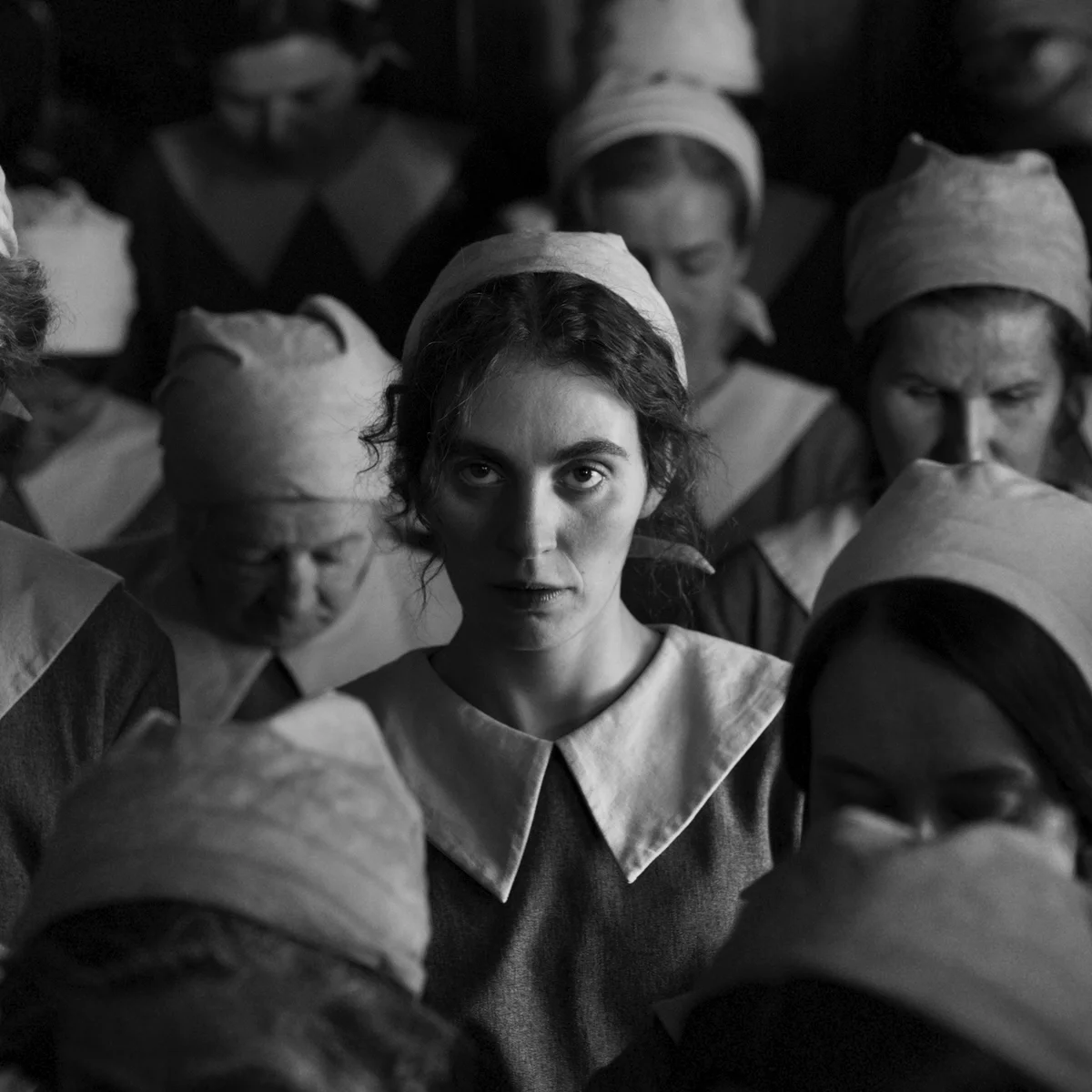
Denmark/Poland/Sweden (Danish): The Girl with the Needle

From the beginning, it’s clear this film is going to be grim. It’s post-WWI and a young woman is left with no widow’s compensation because her husband has not been declared dead. She moves to a nasty apartment and works as a seamstress in a factory. She begins a flirtation with the boss, which of course is doomed from the start. Once she finds she is pregnant, her battle-mutliated husband returns. After trying to abort the baby, she meets a woman who says she is running a secret adoption agency. When her baby is born, she takes the infant to the woman and rather than pay the fee, she becomes a wet nurse for babies brought to the woman until they find a home. Again, there is no hint of a hopeful, warm and fuzzy feeling in this whole setup.

Some major trigger warnings in this film – horrible war wounds, PTSD, deadbeat dad (with a nasty controlling mother), abject poverty, drug abuse infant murder. And yet, in some ways this is a beautiful film. Black and white is used masterfully, providing a stark but stunning backdrop for the story, which the director calls “a fairy tale for grownups.” That description suits the film, since the original, non-Disney versions of most fairy tales can be rather gruesome. And it does have a sort of happy ending with healing and reconciliation and positive steps toward getting on with life and not being alone.

Iran/Germany/France (Farsi): The Seed of the Sacred Fig

A bold, gripping story that had to be filmed in secret. And it’s a pretty remarkable, well-made film, considering it had to be done completely on the sly. The story of getting the movie made could itself probably be made into a thriller, since the writer/producer/director has been arrested many times for violating censorship laws and had his passport confiscated. After making this film he was sentenced to 8 years in prison, flogging and confiscation of his property, but managed to escape to Europe over a 28-day “exhausting, long, complicated and anguishing journey.”

The story is ficitional but depicts a family in Tehran during 2022-2023 protests, in which students and women played significant roles. We meet a devout, honest lawyer – husband and father of a close-knit family – who receives a promotion to investigating judge in the Revolutionary Court in Tehran. He and his wife are pleased with the recognition of his years of hard work and talk about the perks of more money and a bigger apartment and the benefits for their daughters. It doesn’t take long to learn that moving up in a government position is more complicated than that.

At first, his wife is totally on board, encouraging their teenaged daughters to be cautious about talking with their friends about their father’s work, posting on social media, etc. She believes it’s all for the good and her husband will prove his skills in the new position and continue to be promoted. Then he brings a gun home. For protection of the family, he says. He also becomes more and more reticent about talking about his work and is clearly shaken, usually withdrawing to the bedroom alone at the end of his day.

Meanwhile the girls become ever more concerned about the protests they’re seeing on social media and even more concerned when a friend disappears – a friend who had previously been shot for being in the wrong place at the wrong time, making her a suspect for being part of the protesting mob. Their father becomes more paranoid each day and falls more in line with government policies and agendas, making himself believe the arrests, beatings and executions are justified. He takes the family away so they can have some time alone together, but he turns on them. They fight back.

The film does a great job of incorporating actual cell phone footage of the riots. Placing the chaos and fear during these events firmly into what was once a normal family setting is terrifying. I was forced to imagine – What must that have been like? As a mother, what would I have done? What could I have done? What would have happened to my daughter? It was difficult to watch, but we had to see it through. I’m thankful that the film made it into safe hands. I’m glad we saw it. Sometimes I need to be forced to remember that my little world is not the whole world.
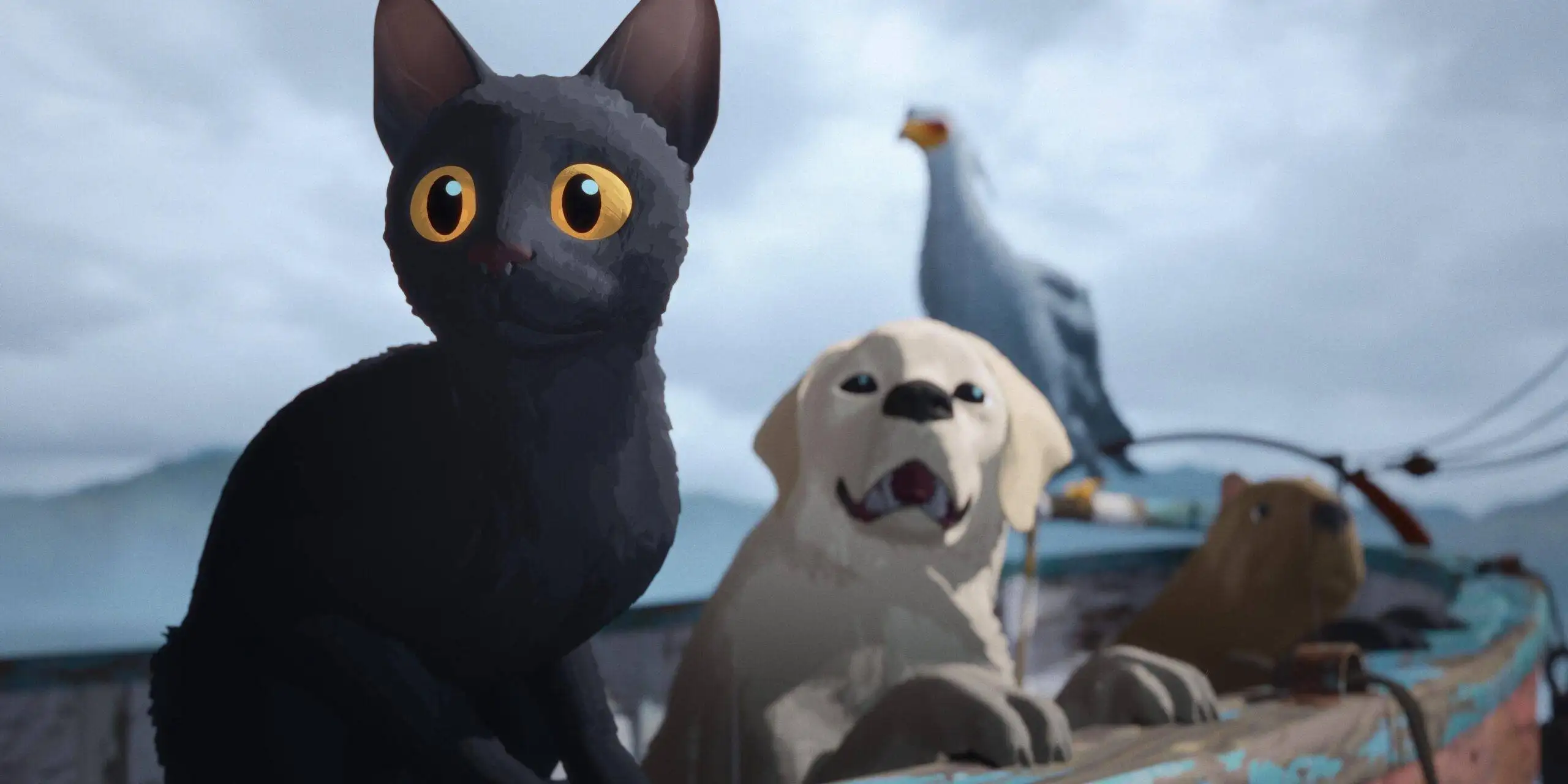
Latvia/France/Belgium: Flow

An international film that requires no subtitles because it’s all animals, all the time. No humans were required in the making of this film. (Maybe a few behind the scenes.) We can understand meows and barks and squawks as well in foreign-language films as we can in English.

Even without a language that ties it to a specific country, this film suits the international category because it’s hard to pin down just where in the world the action is happening – sometimes looks like Europe, sometimes like Southeast Asia – and ocean-blue water is everywhere. I kind of felt like it was representing the whole world, the way it might work if the inhabitants worked together and accepted each other’s unique abilities no matter where they meet along the way. I doubt it will win best international feature, but it’s a lovely film.

Some stories work better without people getting in the way

Oscar Nominees: Animated Feature

In recent years my husband and I have been going to the movies like it’s our job, but we typically skip most of the potential nominees for best animated feature. We don’t have anything against animated pics, but once our kids grew up, we stopped going out of our way to see them unless there was something new or special about them.

This year we actually saw all five of the animated feature nominees, partly because our 25-year-old daughter is currently living with us and she’s a fan of the genre. We saw the first two in the theater, the rest we streamed at home. I enjoyed all five of them and consider them worthy nominees. As I reflect on them now, I realize that they include fine examples of the use of animation to effectively address challenging subject matter.

Here are the nominees, in the order we saw them:

Inside Out 2

It’s been a while since I saw this one. I remember we watched the first Inside Out the night before to refresh our memories, and I was glad we did. Seeing the previous film made it clear that this was a better, more interesting film. Not that I didn’t like the first one, but the second had a more complex story and cooler animation. It also did a good job of highlighting the new emotions that come with adolescence. I loved how the portrayal of the new emotions – anxiety, envy, embarrassment, and ennui – had just the right balance between ridiculous and absolutely serious, because the emotions roused by the ravages of puberty fit into both categories.

I remember the animation as more impressive than I expected, showing texture and movement and color with what seemed to me to be new techniques. The consistency of colors and characters between the first and second movies was very good, but Inside Out 2 was an enjoyable improvement all around. But probably not the best animated film of the year.

The Wild Robot

When I saw the trailers for this movie, I wasn’t sure about how much I would like it. I was afraid it would over the top in some direction – maybe too much focus on robots or the environment, a bit like an updated Wall-E. Or sappy without much of an engaging story. But I knew it had great reviews, so when we went to see it I was hopeful.

For me the story got off to a bit of a slow start. It was visually interesting and pleasant enough, but I wasn’t quite believing it in the beginning (and some aspects of it did kind of remind me of Wall-E). But as Roz the robot got involved with the local wildlife, and especially when the flight training began for her adopted goose, I settled into the story. And it was an engaging story, taking me places I didn’t expect to go, mixing in a lot of great messages about working together and thinking about others more than yourself.

I appreciated the fact that the animation was kind of traditional, not trying to make the animals look like they’re almost real. It was colorful, creative, engaging. But overall, it seemed to me to be your standard, high-quality animated film – the type put out by major film companies every year. I enjoyed it. I even cried a bit. (My husband and I cry at movies more often than not. What can I say? We allow ourselves to enter the story.) From all I’ve read, this one is expected to win the Oscar, and if it does, then a hearty congratulations to all involved. It’s a well-made film with a positive message that’s not too heavy-handed, and it reached a lot of young people. I definitely don’t mind seeing a film like that win awards.

Wallace and Gromit: Vengeance Most Fowl

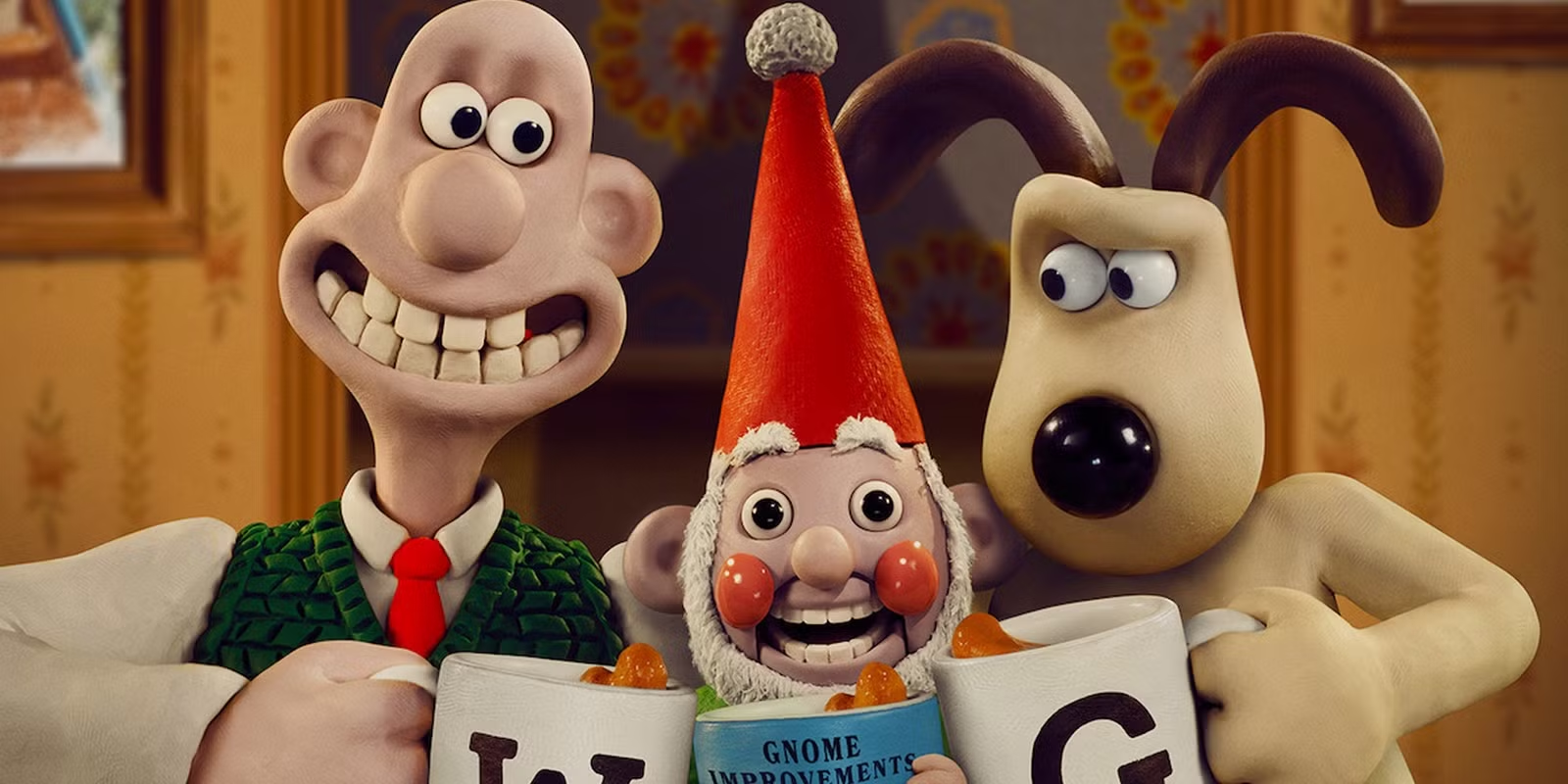
I love Wallace and Gromit. My whole family loves Wallace and Gromit. I was so happy to hear my three-year-old grandson nearly overcome with laughter while watching The Curse of the Were-Rabbit. So of course there was no question that we would watch and enjoy this film. And once again the intrepid duo delivered a grand adventure of a tale, and I will no doubt watch it again.

I’m always impressed by the time and skill it takes to make a good stop-motion animated film and Nick Park and Aardman Animations have been putting in the time with great success for decades. I love what they produce and will always watch their films. Is this the best animated feature of the year? If Wallace and Gromit win – fabulous. Heck, I think they should get a lifetime achievement Oscar.

Memoir of a Snail

After watching this film, the word that came to mind over anything else was “unforgettable.” I have definitely never seen a film like it – animated or otherwise. So many potentially-life-destroying topics are explored here. I’m not even sure I can remember all of them but they include: physical deformity, death of parents, bullying, abusive foster parents, religious fanatacism, abusive partner, hoarding, playing with fire, obsession, homophobia, alcoholism, loneliness. And yet, I laughed out loud more than once. The humor was often pretty grim, but it was clever and genuinely funny. This film was also quite touching, portraying deep and loving relationships. (And yes, I did get a bit teary-eyed at one point.)

Throughout, I kept wondering if I would even watch a live-action film that explored so many tragic real-life topics and tried to make viewers laugh. And I’m pretty sure I would give such a film a miss. I doubt if I could take it. If this is the story that needs telling, stop-motion animation is a perfect format. It gives us some space to process what’s happening without being overwhelmed. We can take a break from the sadness and admire the dense and intricate set constructed from clay.

The animation was exceptional and did not pretend to be realistic. It was fabulous, cartoonish claymation. I want to say it was colorful, but that’s not quite true. There was a muted tone about the whole film that suited it perfectly. And there was so much detail – a believable and complete clay world. I would award the Oscar for best animated feature to this film because it uses excellent animation to venture into very difficult territory. It stands out among the nominees.

Flow

This lovely film is unique among the nominees in that it uses no words. An international film that requires no subtitles. The animals in the starring roles are not pretending to be anything else, so they can’t talk. They can do a lot of surprising things, but they can’t talk.

Flow takes us on a wild boat ride with an unlikely crew of animals. A catastrophic flood hits a world that is filled with wildlife, but appears to be post-human. Plenty of manmade structures, but no people. Cat is our main character, who scrambles onto a passing boat just as the waters rise above the chance of any foothold – even for a cat.

There’s a capybara already onboard. The animals give each other a sniff and float off together. Things get a little crazy when a flock of secretarybirds fly over and the cat falls overboard, but is saved by a very interesting-looking whale. A bit later on, the capybara invites a ring-tailed lemur with a basket of trinkets to join them. Then a Labrador who was previously friendly to Cat joins as well. During a brief stay on land, a hostile flock of secretarybirds go after the little group, but one stands up for them and ends up injured and unable to fly. Naturally, the bird joins the crew.

The action and adventure in the film is nonstop and very entertaining. The animated world is lush and beautiful and always in motion. It reminded us a bit of the graphics for the 1993 video game Myst. It’s hard to pin down just where in the world the action is happening – sometimes looks like Europe, sometimes like Southeast Asia. That may be part of the point of the film – a story about acceptance and cooperation, finding ways to communicate and work together to get through difficult situations, no matter where you are or who you are. And in telling that story, it succeeds beautifully. It would be nice if it won.

Definitely not my Saturday morning cartoons

Oscar Nominees: Animated Short Films

I can’t help but begin my musings about the 2025 Oscar nominees with those I’ve seen most recently, mainly because I’m still thinking about them. My husband and I saw 10 short films in one afternoon – 5 animated/5 live-action – and it was a lot to process in a short time (roughly three hours).

Especially since we started with the live-action shorts. I quickly realized that filmmakers are likely creating short films to make an intense, emotional, gut-wrenching point. It was quite an experience to watch five of those in a row before lunchtime. I was glad we had some time to go outside and walk around a bit before our next set of films. Happily, the animated shorts were generally easier on the emotions. but they were definitely nothing like Looney Tunes, The Flintstones, Scooby Doo or any of the other cartoons I grew up with.

I know nothing about filmmaking, but I assume that there are skills and tools needed for animation that are very different from those needed for live-action films. And simply because I’ve been watching animated films for 60+ years, I recognize that they have been dramatically changed by use of computers – just like everything else in the world. And honestly, using the word “computers” for what I mean doesn’t really sound right anymore. Sounds old-fashioned and too limited to suit the range of technology utilized in modern animation. But that’s just me fussing over linguistics. Let’s just say I find modern animation astounding and fascinating. I have grown accustomed to being surprised by something each time I see a new animated film.

For the most part, we watch animated films for the same reason we watch live-action films – a good story. We’ll likely have different expectations for animation compared with live-action, but whether we’re looking for laughs, for frights, for romance, for adventure, or for a good cry, we can find it all in films that have moved far beyond the Saturday morning fare of my childhood.

I’ve listed the five nominees for Animated Short Film in the order they were shown in the theater.

[Spoiler alert: I am famous in my family for inadvertantly providing too much information for shows they haven’t seen yet, potentially spoiling surprises. So if that matters to you, beware!]

Japan: Magic Candies

A little gem of a film. We meet a young boy named Dong-Dong playing marbles in a park. He plays alone with a dozing dog for company, and claims to be content that none of the other kids ask him to join in their games. On his way home he picks up a bag of what looks like more marbles, but is actually a bag of magic candies. When he gets home and tries one, he finds that as long as the candy is in his mouth, he is able to have conversations that are definitely magical. But once the candy melts, the magic is done.

These magical candy-fueled conversations are funny, heart-warming, bittersweet and beautiful. Dong-Dong takes it all in stride and seeks to make the most of the experiences. There is a good balance of silliness and humor, a bit of melancholy and plenty of warm and fuzzy sentiment. The stop-motion animation is clever, colorful and fun to watch. In terms of sheer enjoyment, this would be my top choice for an award.

Iran: In the Shadow of the Cypress

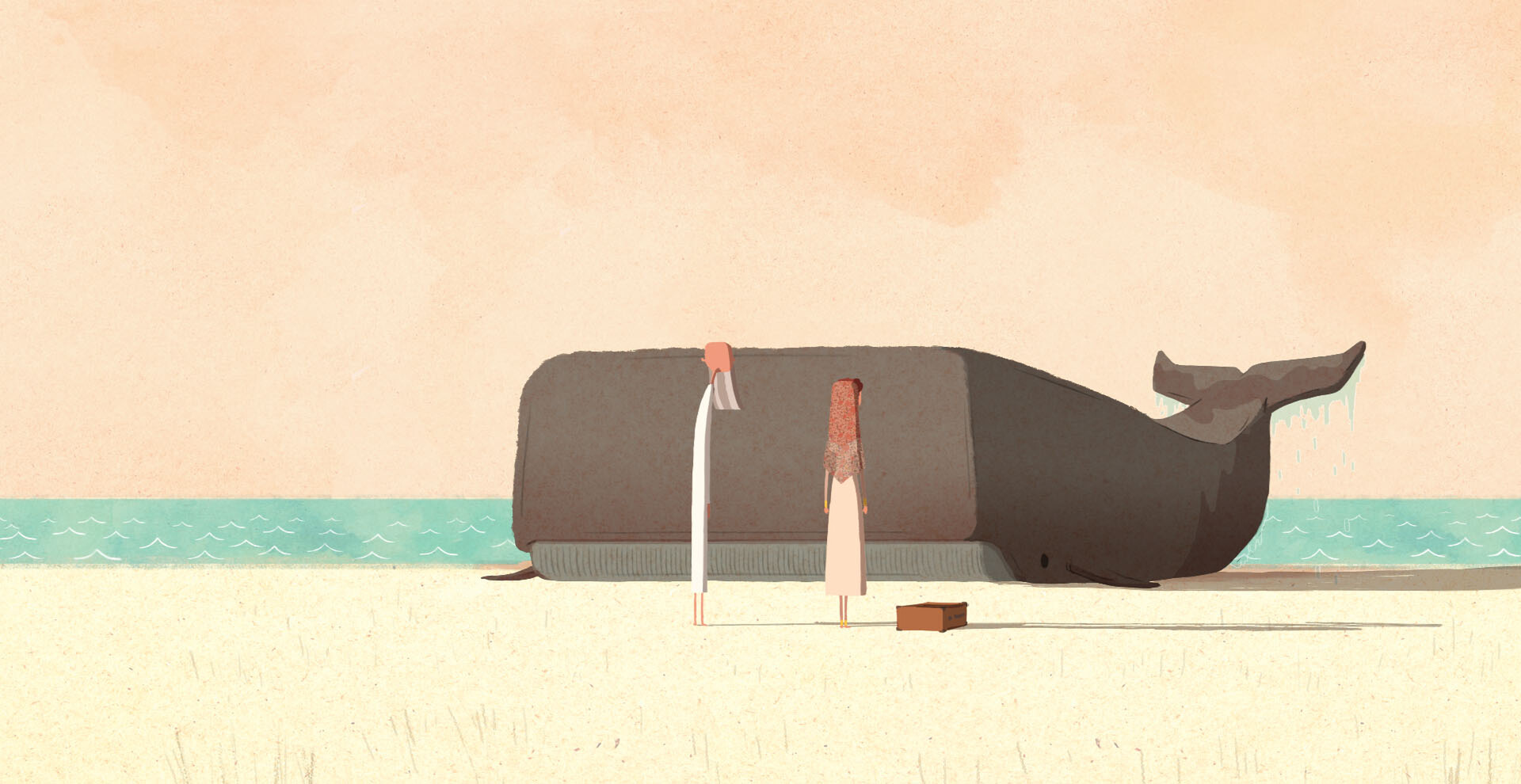
Compelling and sometimes tough to watch. This wordless story introduces us to a man and his adult daughter, clearly at a crisis point. We see evidence of regular violent outbursts and sorrow. The weeping young woman has prepared dinner for her father and has packed her bags to leave, clearly unable to cope any longer. She opens the door. He hangs his head and does not try to stop her. And on the beach in front of their house they see a stranded whale.

Both run to the whale to try to help it, digging sand from beneath it, tying a rope to the tale and trying to use a small motorboat to pull it back into the water. When that fails, the father continues out to an offshore shipwreck and stays while the daughter tries to keep the whale wet and cool as the day heats up. On board the shipwreck, we share in flashbacks to an aerial attack, gunshots, explosion, a drowning woman and a small child. Both father and daughter continue to work to rescue the whale – the daughter struggling on her own, the father forming a daring plan between his devastating flashbacks.

The animation makes effective use of simple lines and movements and soft, pale colors. The story’s conclusion is both triumphant and heartrending. A well-told tale, definitely not light entertainment.

France/Belgium/UK/Netherlands: Wander to Wonder

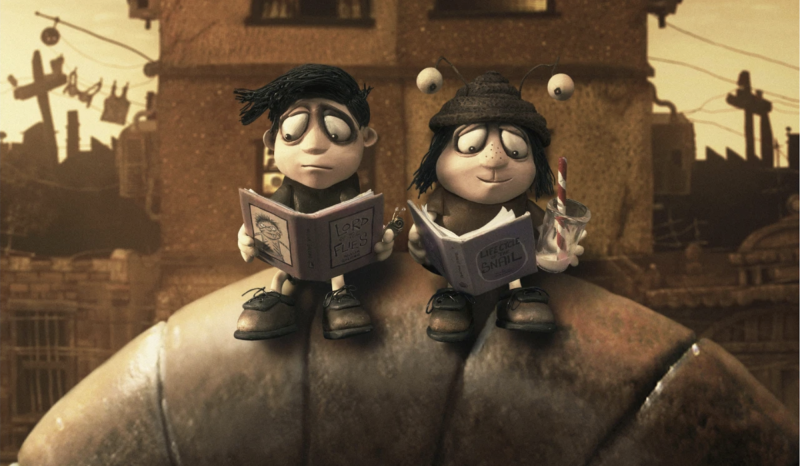
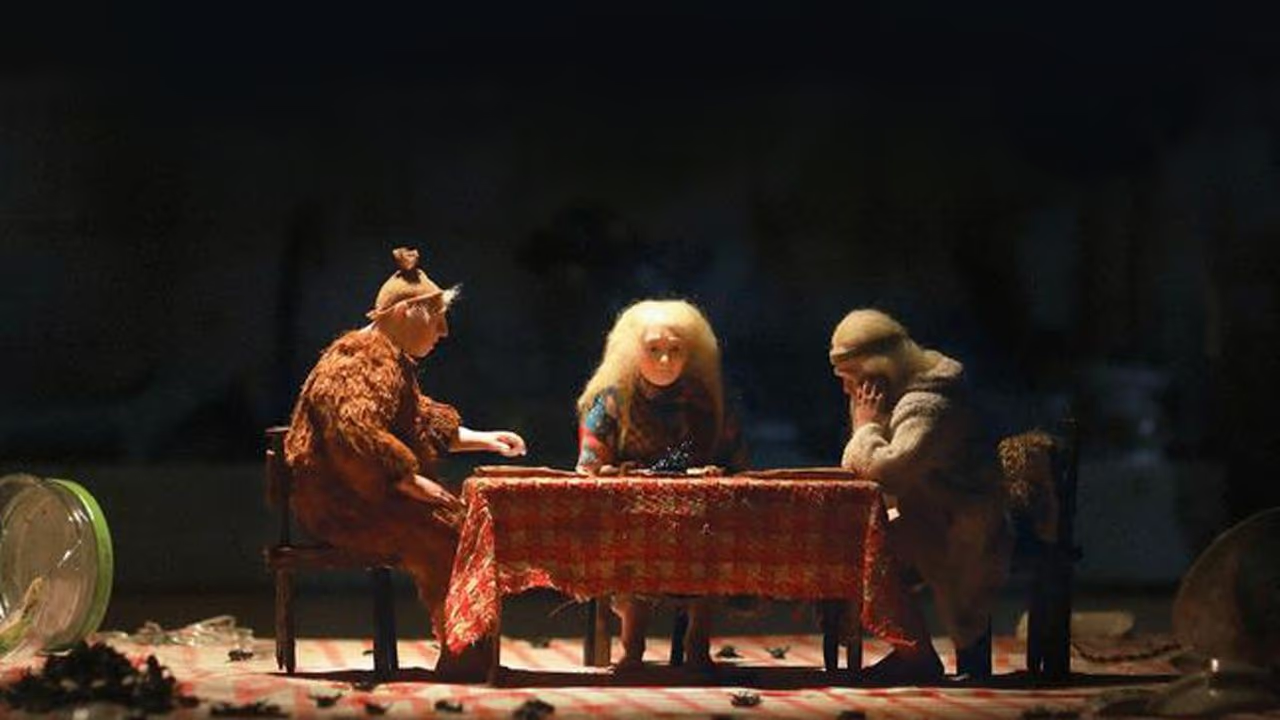
For me, this is the film that lingers. It opens with a clearly worn-out recording of a children’s TV show. We see an older man talking with small furry creatures living in a miniature woodland setting. Think of Captain Kangaroo or Mr. Rogers talking with their puppet friends about their activities and what they’re learning. Flies often buzz past the screen as the show plays.

We meet three very small aging characters wearing scraps of clothing, including remnants of the furry costumes seen in the old video. One male character runs around in no pants, quoting Shakespeare. The female reads old letters from children who wrote in to the TV show and tries to record new shows. The other male bumbles around and smiles vaguely, looking like a lost street performer. They work hard to break open a pickle jar and then share a pickle for dinner. Flies are present in most scenes. We eventually see a pair of shoes on the floor, still on the feet of a motionless body. Among their various activities, a crisis arises which brings about devastation and, just maybe, new possibilities.

This short film evidently took 8 years to make. The animation is incredible. I’ve never seen such lifelike movement in a stop-motion film. It was hard to shake the notion that I was watching actual tiny people. I came away unsure whether the story was about aging, coping with death and/or change, pursuing one’s purpose in life, imagination and reality – or all of that and more. It was mesmerizing, disturbing, wistful, hopeful. I found it powerful and unforgettable, even though I’m still not exactly sure why. If I had to choose which film I thought was the best, it would be this one.

France: Yuck!

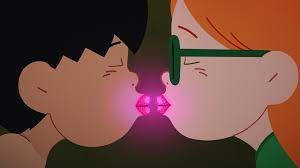
This film was cute and easy to watch. More like a traditional cartoon than any of the others. Young kids at a very crowded campground, playing together and getting grossed out by anyone engaging in public displays of affection – especially kissing.

Not surprisingly, a couple of the kids are secretly not so grossed out by the idea of kissing and much of the film is about how and when they’re going to get together to try it out. Throughout the film, lips glow pink whenever someone feels the urge. Again, it’s cute.

Not much more to say about this one. It was cute, colorful, mildly entertaining. As far as I could see, the message is that people love love and it’s not gross.

Belgium/France/Netherlands: Beautiful Men

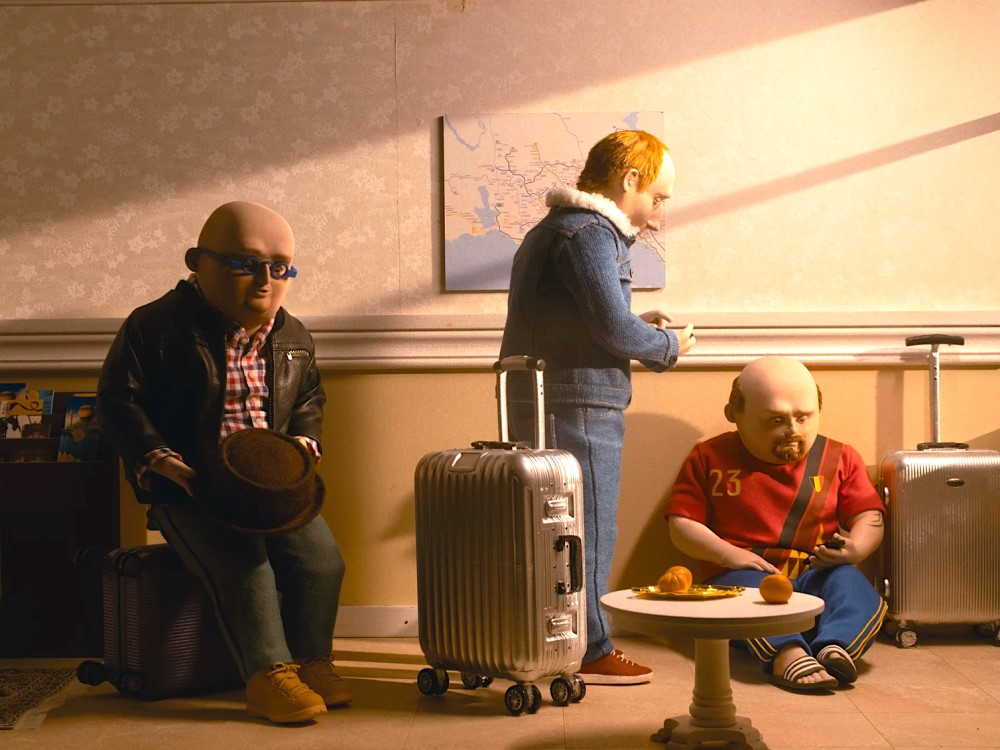
Interesting and unusual topic for an animated film. Three European brothers are in Turkey for hair transplants. There’s a mixup and it looks like only one will be able to get the surgery done.

In the meantime there are some brotherly discussions and some arguments about relationships, about health scares, but not really much discussion about the reasons for wanting hair transplants. They mostly spend their time waiting and talking. But we do get to see the eventual outcome of their trip.

Another excellent use of stop-motion animation, in a very real-looking setting. Facial expressions, emotions and activities come across as natural and genuine. Very well done, but again, seems an unusual topic for animation.

While I enjoyed these short animated films, I couldn’t help wondering about the reasons behind choosing animation to tell these stories, especially stop-motion, which can take a long, long time to complete. It seems unlikely that these films will become widely known or commercially successful. Is it the artistic challenge? A chance to advance filmmaking in general? A simple love of the art form? Or just the best way to tell the stories the filmmakers wanted to tell?

I’m not sure, but I’m glad I saw them. May the best film win.