
Oscar nominees: Live-action Short Film
When I bought tickets to see all of the Oscar nominees for live-action short film in a single showing, I was pleased for the opportunity of a new movie-going experience. This year I would have reason to pay close attention to that section of the Oscar presentations, rather than thinking, “Very nice, well done, let’s get on to the real awards.”
One thing I found in watching these short films is that they are very real, with obvious effort and heart put into their production. I also found that it’s one thing to watch a single moving tale about something that is out of joint in the world around us. It is a very different thing to watch five of them in a row.
We were emotionally spent. Exhausted. Sad, even heartbroken. Wondering if there was any hope for lasting positive change around the world. Despairing that there will always be people in desperate situations and people who care only about their own gain, their own power, their own beliefs. It was hard because we knew that, even though some were fictional, these stories were very real.
I’m listing the 5 nominees in the order they were shown at the theater. And spoiler alert – I’m going to talk these all the way through because the importance of these films is very much in the point they’re making, and that tends to be made clear in way it ends.
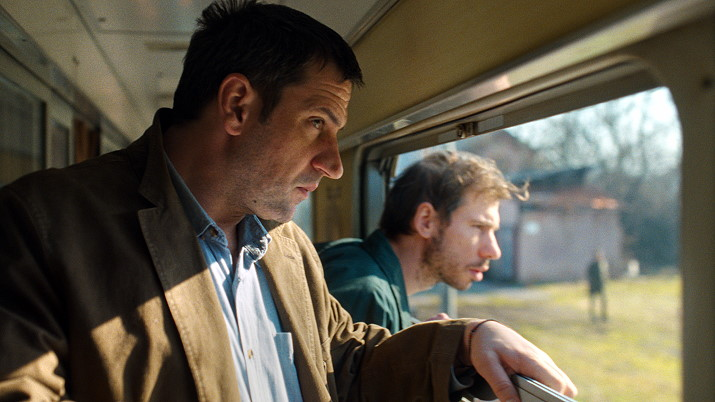
Croatia: The Man Who Could Not Remain Silent
We watch an ordinary-looking man sitting quietly in his train car with a small group of people traveling through Boznia/Herzegovina on an everyday-looking train ride. The train makes an unscheduled stop but no official announcement is made. People get up to look out the windows at the commotion outside.
Paramilitary thugs board the train, demanding to see passengers’ identification documents, asking questions about their families’ patron saints. Passengers witihout documents or who are muslim are forced off the train and into the back of a truck. A young man in our car admits he has no documentation. Our ordinary man assures him it will be all right, that they won’t let anything happen to him.
But when the thugs appear in their car and try to take the boy from the train, most remain silent, intimidated by the bullies with rifles. Some feeble protests that he’s done nothing wrong. But one man stands and demands to know what right they have to treat passengers this way, demands to speak to their superior officer. His documents show that he is a retired naval officer. He refuses to back down and they take him out to the truck instead of the boy. No one in the car reacts. The train starts up again and enters a tunnel. The film ends with a tribute to Tomo Buzov, who was executed for his attempts to stop the massacre in 1993.
I appreciated the title of this film because I didn’t know the story. I didn’t know who could not be silent or why, so watching a car full of pretty silent people, I was kept wondering who it would be. I initially thought it would be the man we met first, so I kept watching him. Then he let us down. The undocumented boy didn’t speak up for himself much. Then we hear a voice rising up out of the frightened silence and it is powerful, even though by that point we know it will not end well for him.
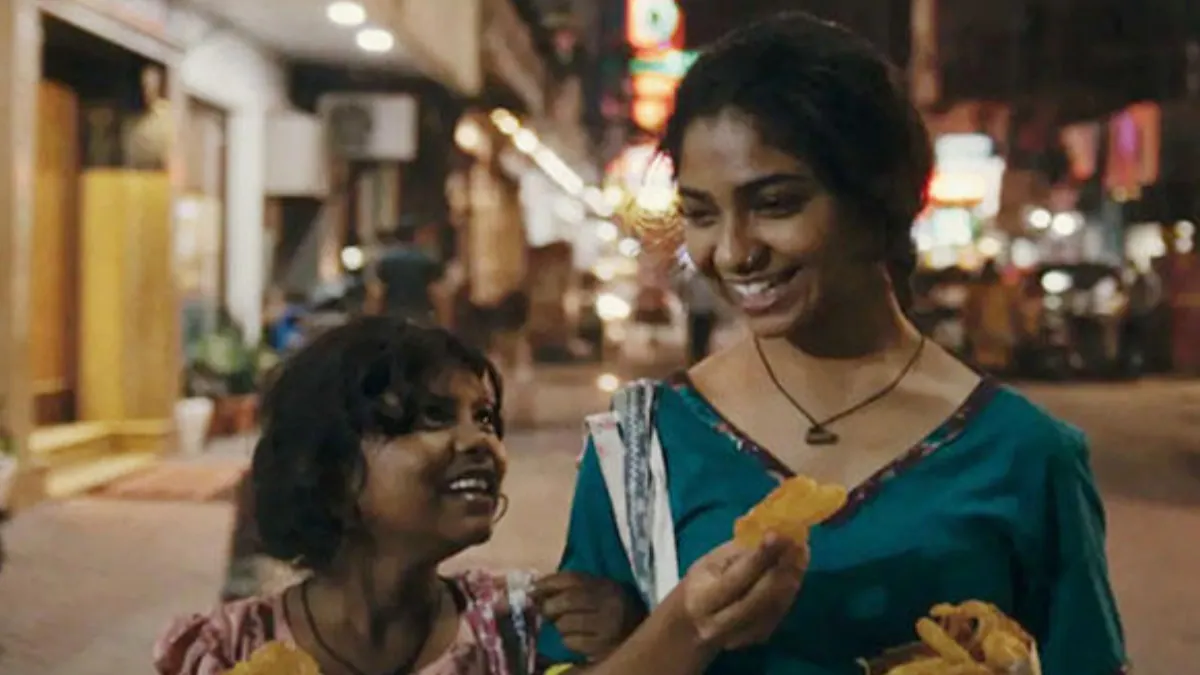
United States (Hindi language): Anuja
We meet two orphaned sisters in Delhi. The girls live on their own in a shack on the streets and work in a garment factory making handbags. They are obviously close and trying to make the best of their lives.
The younger girl is clearly elementary-school age and we find that she is mathematically gifted when a teacher comes to the factory to insist she be allowed to come and take a test that would allow her to go to boarding school. The test costs 400 rupees ($5), which the girls do not have. The factory boss wants to keep the girls in the factory, claiming staying together and making some money will be better for them. Once he realizes the young girl is a math whiz, he also has ideas of using her for bookkeeping/accounting rather than paying a professional and tells her he wants her in his office first thing in the morning rather than going to take any test, suggesting that if she doesn’t, she and her sister may be out of a job.
The older sister reveals that she has been secretly making handbags with scrap material and decides they should go into the markets and sell the handbags to raise money for the test. They sell enough for the test and for a trip to the movies. But on the morning of the test, we are left watching young Anuja as she stands out in the street deciding between staying with her sister – her only family and best friend – and moving away to a future that she understands little about. For us, the story ends there.
I thought that ending was great because as the film progressed, I was more and more unsure about what the best choice was. When it came down to it, the factory boss wasn’t a terrible guy. He employed minors, yes, but didn’t seem to be abusive. He would pay her more for her accounting work and would no doubt treat the sister well to keep them happy. The teacher didn’t show a huge interest in the girl, other than it might be a feather in his cap if he found a prodigy for the boarding school, one that would also tick a box to show how inclusive they were. (In the factory office he slips up at one point and says good opportunities are rare for “that kind of girl,” likely referring to her poverty and dark skin tone.)
I enjoyed the film because of the obvious love between the sisters and their positive attitude about life. At the end we get to see the star of the show happily watching the movie with her classmates at a school for street children in Delhi.
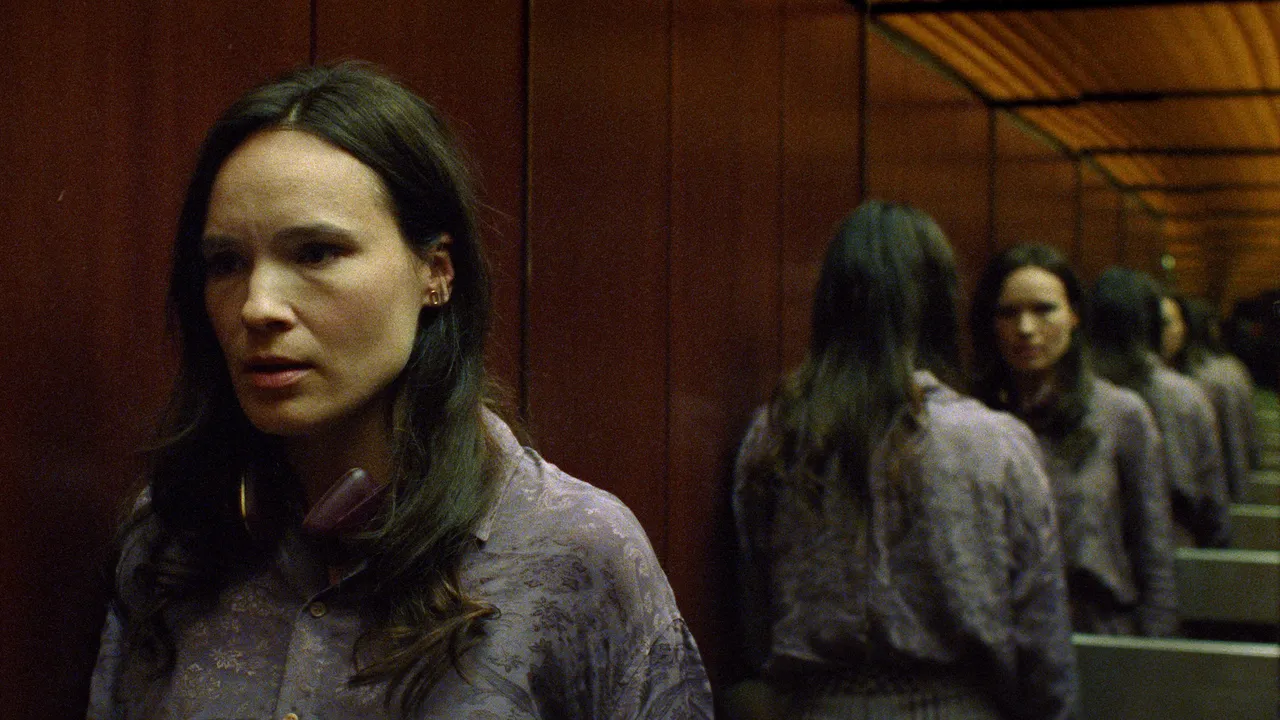
Netherlands/Belgium: I’m Not a Robot
Opens with a quiet office scene, a woman working at her laptop. A system update prompts her to restart her laptop and requires her to go through some “I am not a robot” tests that anyone using smart phones or computers has seen. She fails the tests time after time, until she gets to a link asking her to answer some questions. When she completes that task, she gets a message that informs her that there is an 87% chance that she is, in fact, a robot.
This is obviously extremely annoying and she wonders if it’s a glitch or a prank. No one at work can help her and she calls her boyfriend to vent. He becomes more and more uncomfortable as they talk and then falls back on the old, “Sorry, you’re breaking up. We’ll have to talk later.” Obviously, he knows something she doesn’t. Sure enough, he later arrives at the office with a woman representing the company from which he had bought her years ago.
The young woman really does not want to be a robot and has trouble accepting that many of her memories are merely programming. Her boyfriend assures her he loves her and it shouldn’t change anything about their relationship. He had her programmed so that she could think freely and have her own opinions and he loves that she is a strong woman. She’s not having any of it. During the course of the conversation/argument, she learns that she cannot die until after he does. She asks if his former girlfriend had died. The answer is yes, so he wanted to make sure that could never happen to him again. Thus, a robot girlfriend who can’t predecease him. She gets mad and tries to prove him wrong by jumping off the roof of the parking structure. She hits the ground, blood seeps out beneath her head. Her eyes open and she begins to weep.
For me, this film was the least satisfying of the lot. It was less emotionally charged, and it left me feeling a bit flat. In the end, I was not sure what the main point was. It didn’t leave a strong feeling about abuse of women or dismissal of their rights as people. It didn’t seem to be a strong message about misuse of technology or a science-fiction-style warning about the potential dangers of sentient robots. And I wasn’t left with any feeling that maybe we’re all in danger of becoming like robots. It just kind of ended as a tale about a robot who would have been a lot happier not knowing she was a robot.
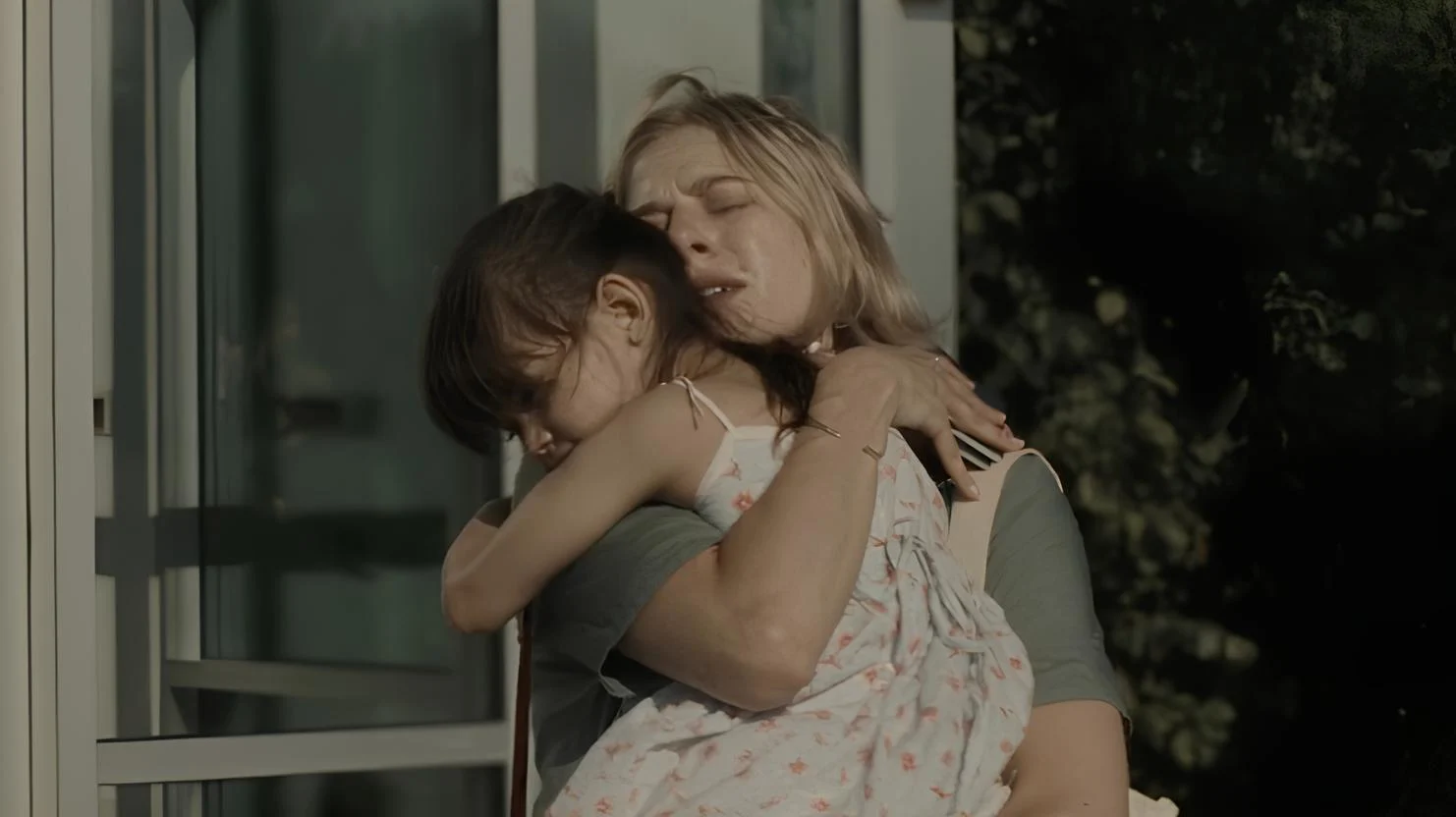
United States: A Lien
This was tough to watch. A bit too close to home and very, very current. We see a young couple and their daughter rushing to a meeting. The husband has a mandatory interview as he seeks US citizenship. He has lived in the US most of his life. His wife of six years is a US-born citizen. He served in the US military. While he is in his interview, his wife sees people being taken away in handcuffs. His name is called over the loudspeaker. The wife panics, runs from person to person asking questions, demands that their passports be returned. Everyone she talks to tells her it’s not their department, she just has to wait. During a distraction, she snatches the passports.
She runs outside to see her husband and 5-year-old daughter being forced into a car by ICE agents. She screams and forces one of the officers to look at her daughter’s valid US passport. He grudgingly allows the girl to return to her mother, but husband and wife have to say goodbye for now as he is taken away. The film ends with text on the screen about ICE regularly intercepting applicants for citizenship at their mandatory interviews.
The film is frantic, recorded by handheld cameras (at least that’s what it looks like to me). The surroundings are constantly in motion and everything is in confusion. The main characters don’t know which way to turn and there are no clear answers for them from anyone. They wait and plan to fight back because they have no other choice.
My husband thought this was the best film of the lot because of the depiction of frantic intensity and confusion. For me it’s too much a current reality to appreciate on an artistic level. But maybe that’s part of the point.
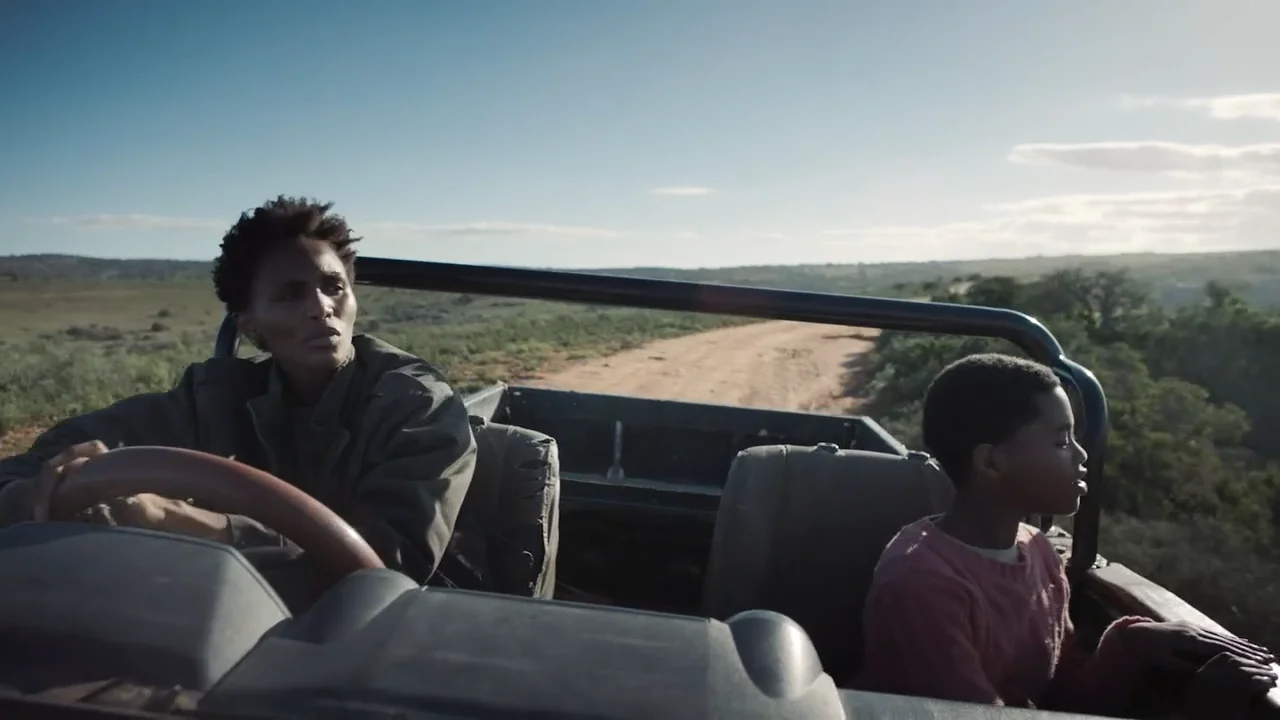
South Africa: The Last Ranger
This film is visually beautiful, scary and intense. We get to experience the wonders of a game reserve in South Africa, along with the fight against poachers. We ride along with rangers dedicated to the conservation of the wild areas and the protection of the animals that live there. And we get to see that they are willing to risk their own lives in that fight.
Walking along the road, a young girl meets a ranger that she knows and is invited to ride along to visit some rhinos. Poachers attack as they watch the grazing animals. The ranger tells the girl to duck down in the car and she draws her weapon and calls for backup. Gunfire erupts, a poacher is wounded, the ranger is killed. A tranquilized rhino’s horn is removed with a chainsaw. The young girl records it all on a phone. As she goes to the side of her dying friend, she sees her father and learns he had helped the poachers by tranquilzing the rhino in his desperation for money to support his family. He helped in the end by tranquing one of the poachers and apologizes to his daughter for his part in this horror.
The ranger’s partner arrives, sees the injured rhino is still alive and asks for the girl’s help. Cut to the future and the young woman is working as a ranger. We learn that the story is true, that the rhino survived, had many calves and is still alive and protected. We learn that poachers have killed over 100,000 rhinos and killed 1,000 rangers in their theft of rhino horns. Horns that are no more magical or medicinal than fingernails or hair. The film closes with video clips of the hornless rhino living a good life and an interview with a ranger who assures us she will be a ranger for her whole life and would die to protect the wildlife she loves. Even with the grim reality of poaching, this film gets my vote for best short film because it leaves us with some hope.
Though watching these films was a rough 90 minutes, I’m glad we saw them. All were well done, gripping, very watchable. Maybe it would be easier to watch them individually over time, but I’m not sure it would be better. Maybe it’s not such a bad thing to have 5 talented filmmakers hit us with their best shots all at once, reminding us of the importance of venturing outside our own safe bubbles to take a hard look at the world around us.
 OK Boomer